










































Casas Maternas in the Rural Highlands of Guatemala: A Mixed-Methods Case Study of the Introduction and Utilization of Birthing Facilities by an Indigenous Population
Curamericas Global (Stollak); Curamericas/Guatemala (Valdez); Centro Universitario de Occidente (Rivas); Johns Hopkins Bloomberg School of Public Health (Perry)
"The Casa Materna model offers an example of how to engage communities to establish community-friendly spaces for high-quality facility deliveries while honoring the role of traditional birth attendants."
This case study examines a community-engagement approach to operate local, culturally appropriate birthing facilities - Casas Maternas - in the isolated northwestern highlands of the department of Huehuetenango in Guatemala, an area with a high maternal mortality ratio (MMR) (338 maternal deaths per 100,000 live births). Guatemala's National Study of Maternal Mortality describes the problem of disparities in maternal health outcomes. The MMR for indigenous women (163 per 100,000) is twice that of non-indigenous women (78 per 100,000), and indigenous women account for 71% of the country's maternal deaths compared with 54% of the country's births. Furthermore, the national percentage of deliveries that take place in facilities is 29% for indigenous women and 70% for non-indigenous women. Guatemala's pronounced ethnic disparities in maternal health are a result of cultural, language, and geographic barriers to accessing services as well as a shortage of rural health personnel.
To address these disparities, Curamericas/Guatemala, in collaboration with Curamericas Global (an international non-governmental organisation, or NGO), began a project in 2011 to expand equitable access to and use of maternal and newborn health services. The project, which built on Curamericas' work in the area since 2002, worked in a catchment area comprising 28,000 women of reproductive age in 3 isolated municipalities in the department of Huehuetenango. A 2011 survey in the area revealed that 89% of deliveries were still occurring in the homes, and 81% were attended by traditional birth attendants (comadronas). The extreme geographic isolation of the communities, lack of transport, and cultural traditions contributed to this situation. The project used a census-based, impact-oriented (CBIO) methodology to mobilise communities and ensure equitable coverage of services.
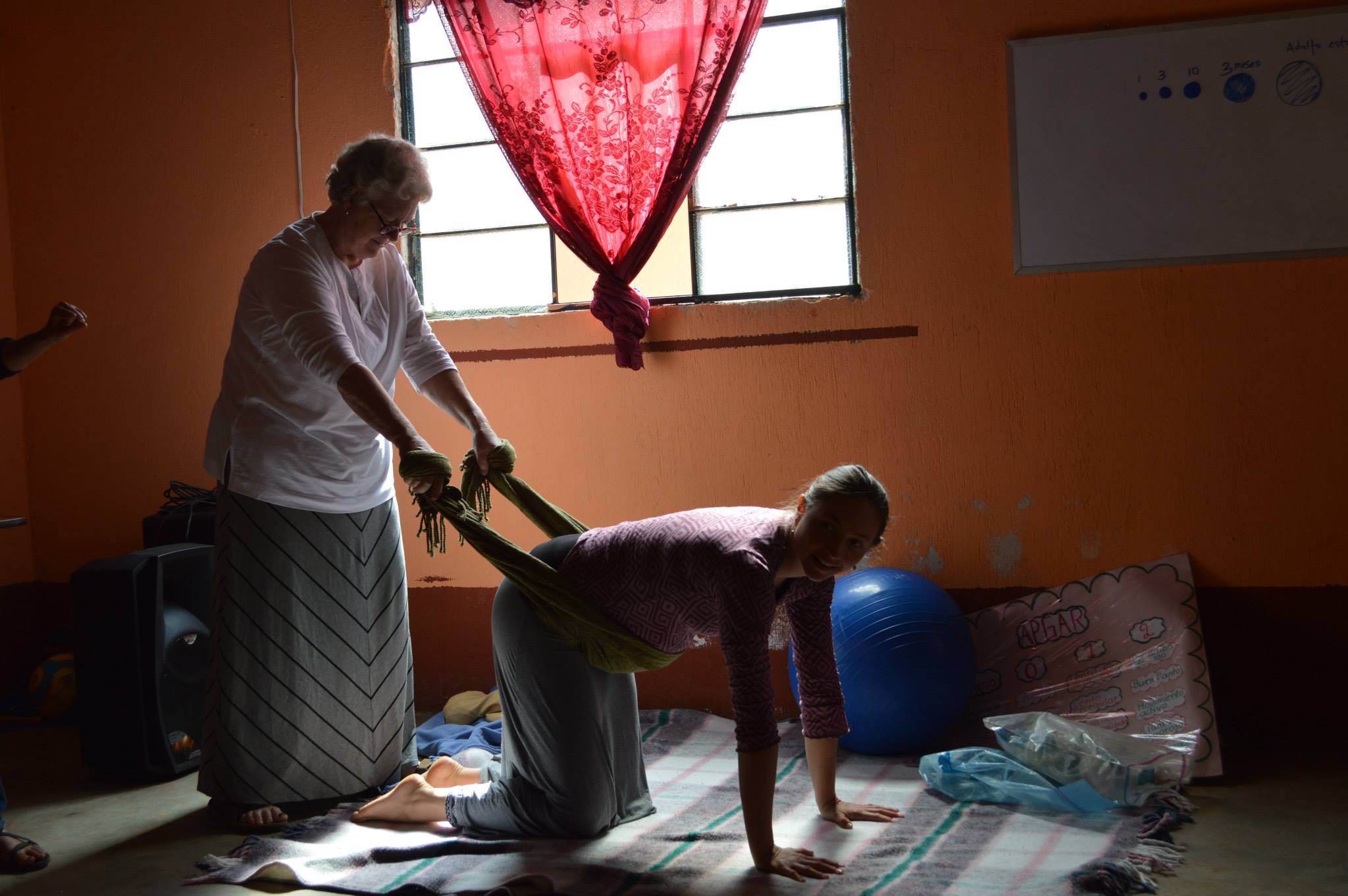
A key component of the programme is the Casas Maternas of Curamericas/Guatemala, which provide local access to community-based, culturally appropriate maternal services for routine deliveries, in contrast to MotherCare's and Project Concern's Casas Maternas model, which focus on high-risk pregnancies. (Full details about the Casas Maternas are provided in a large gray box within the report.) Curamericas engages with communities when planning and operating Casas Maternas, responding to their interests and needs. These maternity centres provide: (i) scientifically validated medical care with cultural and linguistic adaptation; (ii) physical proximity to the patient's home; (iii) community ownership and accountability; and (iv) use of lower-level health staff who are willing to live in the area and are usually from a local community. Each Casa Materna is staffed by an auxiliary nurse and 2 support women, who are trained in (among other things) behaviour change communication (BCC) concerning antenatal care, the importance of health facility births, postpartum care, and recognition of and prompt response to danger signs during pregnancy, delivery, and the postpartum period, as well as the importance of exclusive breastfeeding and how to do it. They deliver these lessons to support groups of pregnant and lactating women that meet at the Casa Materna. According to Curamericas, in contrast to Ministry of Health (MOH) facilities generally, at all the Casas Maternas, the staff members speak the local Mayan dialect, and traditional cultural practices - including the presence of family - are respected. In the partner communities, the comadrona is considered as part of the team but is not formally a member of the staff of the Casa Materna. "From the outset of its work in 2002, Curamericas has developed a relationship of respect and collaboration with comadronas. Being careful not to interfere in the relationship between families and comadronas, Curamericas recognized that comadronas are inextricably embedded in the local culture and are thus essential partners for improving maternal and newborn care. Since the work of Curamericas extends down to each household, the program has been able to develop and maintain contact with the comadronas."
In addition, the project utilised a Care Group methodology, which uses volunteer female community peer educators to motivate behaviour change and generate demand for maternal/newborn services. In brief, after working in partnership with communities to identify all households, the project recruited 1 woman volunteer for every 10-12 households with a mother and young children to serve as a volunteer peer educator. The volunteers shared key maternal and child health messages with the mothers every 2 weeks through home visits or during meetings with a few neighbours. A group of 10-12 volunteer peer educators met every 2 weeks as a Care Group with a paid facilitator to learn a new message to share with their neighbours, to discuss their activities during the previous 2 weeks, and to report any new vital events.
The study of this approach was conducted in the municipality of San Sebastian Coatán, which has 32 scattered mountainous communities, many of which remain accessible only by foot or motorcycle. These communities belong to the Chuj ethnic group, which has strong ancestral customs, and levels of education and socioeconomic status are quite low. There are 2 Casas Maternas operating in the study area: one in the small town of Calhuitz and the other in the town of Santo Domingo. There are 9 and 12 partner communities (self-selected) for the Casas Maternas in Calhuitz and Santo Domingo, respectively. The other 11 communities in the study area are non-partner communities.
A mixed-methods design was chosen to document the extent to which the project's Casas Maternas were used by the surrounding population and to understand how women addressed the complex issues surrounding the decision of where to give birth. Study participants were all of the women who had given birth in the study area during the 12-month period between April 1 2013 and March 31 2014. Quantitative data were collected in September 2014 by a survey team of 12 trained women professionals (teachers and health educators) who were fluent both in the local language (Chuj) and in Spanish. For the qualitative data collection, key informant interviews and focus group discussions were carried out in 6 purposively selected communities: 2 from non-partner communities (Yoxacla and Chenen) and 4 from partner communities (Calhuitz and Santo Domingo, each of which had a Casa Materna in operation, as well as Ulna and Lolbatzan, which did not have a Casa Materna).
A total of 275 women were interviewed. Among the 189 women in the study who resided in partner communities, 69.8% reported that they delivered their child in a health facility (54.4% in a Casa Materna) during the period from April 2013 through March 2014. In contrast, only 30.2% of the study participants from non-partner communities reported delivering in a health facility (17.4% in a Casa Materna) during the same time period. For all the partner communities, the greater the distance, the lower the facility delivery coverage rate. Among the non-partner communities, none of the women giving birth in a facility lived within 3 km of a Casa Materna.
Many people were identified as being involved in the process of decision making about the birthing place, and the woman herself was generally not the final decision maker. The comadrona and the husband were identified as playing key decision-making roles. The comadrona was found to be one of the best supporters of the Casa Materna and a strong motivator for women to have their deliveries there. In some settings, the husband acted as a facilitator by supporting his wife in her decision to use the Casa Materna, while in others, the husband prohibited a facility delivery due to cultural traditions such as machismo (a cultural tradition that embraces the subjugation of women by men that is expressed in attitudes, behaviours, and decisions). Women who perceived that the Casas Maternas provide high-quality care reported feeling more comfortable giving birth at a Casa Materna. Community leaders and comadronas also reported feeling comfortable working with Casa Materna staff members because of the quality of care that they provide. Staff of the Casa Materna reported that the participation of the comadronas during the delivery process was helpful and contributed to good outcomes.
Reflecting on this data, the researchers state that "Casas Maternas are clearly increasing the percentage of facility births occurring among indigenous women in a rural isolated area in the Western highlands of the department of Huehuetenango and therefore are beginning to contribute to reducing the national inequities that exist in this regard." By 2014, 54% of women living in the Calhuitz and Santo Domingo partner communities were giving birth at the respective Casas Maternas, compared to the low percentage of births (21%) taking place at facilities in the overwhelmingly indigenous department of Huehuetenango and the low percentage of facility births (29%) among indigenous women in the country as a whole. Although the study population is relatively homogenous in terms of education (but less so in terms of income), the findings indicate that utilisation of health facilities for delivery is similar across education terciles and wealth quintiles in both partner and non-partner communities.
The researchers attribute community engagement and community ownership - which were critical for establishing the operation of the Casas Maternas (construction and management of the facility) - to the success of the Curamericas programme. They point to 2 recent examples in the literature on Casas Maternas in the Americas in which similar approaches were tried unsuccessfully. In both, community engagement and community ownership were absent. In addition, anecdotal evidence provided by project staff suggests that the outreach component of the Curamericas programme (visiting all homes for promotion of healthy behaviours and appropriate utilisation of health facilities) has encouraged mothers to deliver in facilities. Other contributory success factors include the close location of services to families compared with those provided at government facilities and the community's perception of high-quality services provided in the Casas Maternas - that women are treated with respect, that the care is culturally appropriate, and that the care is of good medical quality. Finally, the comadronas appear to have played an important role in influencing women to give birth in a Casa Materna.
According to the report, the government of Guatemala is beginning to incorporate Casa Materna principles into the ministry system by, for example, setting up community committees to provide oversight of health posts staffed by auxillary nurses who are from the area and speak the local language. The authors argue that the approach has relevance not only for Guatemala and Latin America but also for areas of sub-Saharan Africa and South Asia where home deliveries still predominate.
Global Health: Science and Practice March 21, 2016, vol. 4, no. 1, pps. 114-131. doi: 10.9745/GHSP-D-15-00266 Image credit: Curamericas Global
- Log in to post comments