










































The Importance of Social Networking in a National Polio Vaccine Campaign
Ministry of Health, Jerusalem, Israel, and School of Public Health, University of Haifa (Rubin); Lady Davis Carmel Medical Center, and Midaat, Association for Knowledgeable Health Decisions (Landsman)
"We encourage every health care worker to get involved in social networks, despite their challenges, to help bring medically accurate, science-based medicine to the general public in a nonmediated manner."
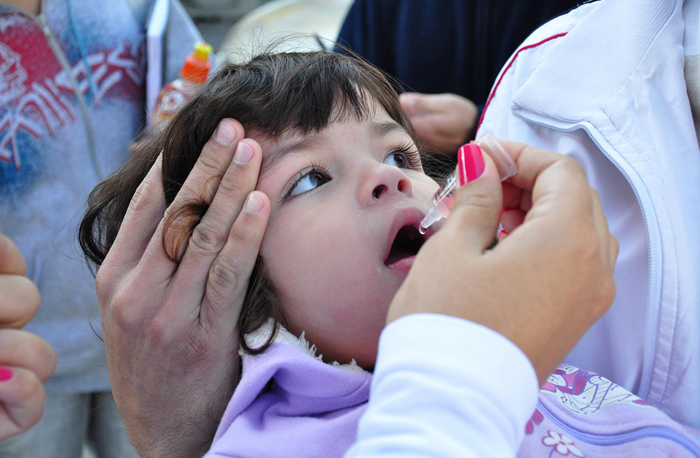
This article describes the experience of the authors in answering vaccine-related questions online from June through October 2013, following the beginning of the first protracted incident on May 28 2013 of wild poliovirus type 1 (WPV1) transmission in Israel since 1988. A door-to-door catch-up vaccination programme with inactivated polio vaccine (IPV) was initiated in the area where the isolations were first identified, but then the reintroduction of live oral attenuated polio vaccine in a country-wide campaign was necessitated. To maximise safety, the bivalent live oral attenuated polio vaccine (bOPV) was given only to children previously immunised with IPV. The campaign was accompanied by extensive public discussion, particularly in the online social networks.
The authors explain that the campaign posed several challenges to winning public confidence: the reintroduction of a previously discontinued vaccine, the silent nature of the transmission, and the focus on reaching children who were already protected to protect others. Initially, the Ministry of Health allocated resources to traditional media to address these issues. However, individuals and groups with an antivaccine agenda began in June 2013 to share their concerns on the Hebrew-language internet through postings that denied the significance of WPV1 in the sewage and criticised the use of live vaccine. The Ministry of Health opened a dedicated website to address public concerns, but more was needed in the age of social networking. Between May and August 2013 this gap was filled by independent blogs of individual doctors, microbiologists, and skeptics.
In August 2013, antivaccination activists opened a Facebook group dedicated to stopping the vaccination campaign. A provaccine group countered by opening alternative group hosting volunteer doctors, scientists, and health professionals. Considerable discussion was also taking place in general parenting groups. In late August, official public health staff were recruited by the ministry to join volunteers in responding to issues raised in these Facebook groups.
The two authors, who took part in this effort by responding to hundreds of posts on hundreds of threads over a span of several months, learned how crucial individualisation in their communications was. Parents questioned whether population-based recommendations were appropriate for their individual child. That required answering hundreds of questions repeatedly, explaining the role of vaccines in interrupting disease transmission in addition to providing individual protection again and again while avoiding "copy and paste" that could cause loss of trust from the parents.
Furthermore, the spread of viral isolations and the changes in the vaccination campaign from IPV to oral polio vaccine (OPV) and from local to national required the public health staff to adjust messages over time. They "needed to learn to convey concepts of statistics, probability, vaccine efficacy, and risk assessment in the terse communications common in social networks."
"The forums became venues to report adverse events in real time. Posts describing events occurring after receipt of the vaccine were transmitted to thousands of listening mothers and created an atmosphere of distrust toward the vaccine. This perception was in contrast to the actual 183 events that were reported among 105 children after 1 million doses. Our presence required us to simultaneously express empathy, maintain confidentiality and trust, and request more information, all the while trying to dispel unnecessary fears."
This engagement in social media had its burdens; maintaining an online presence turned into a full-time (albeit temporary) job in addition to the authors' regular work responsibilities. Moreover, many of the questions raised were highly challenging and required that the authors spend hours researching the literature for evidence-based answers.
Recommendations, based on the authors' experience:
- Get involved from the outset. "It is important that health professionals not shy away from the public discussion of immunizations to provide accurate and trustworthy information."
- Conduct regular public briefings for professionals regarding epidemiologic updates and current issues that concern the public.
- Address the social vaccine concept directly and often. "Giving a greater and clearer voice to the role of vaccines in protecting the unimmunized is critical. If it were clear from the outset that vaccines work to prevent transmission to others, in times when it is particularly important to stress this role, this message would be more acceptable."
- Recruit more professionals to participate in these forums so as to both address parental concerns and help identify relevant concerns in a timely manner for policymakers.
Ultimately: "The immediate nature of social networks means that any question left unanswered by a professional will soon be answered by someone else."
Pediatrics. 2016;138(2):e20154658. Image credit: ASCOM - Prefeitura de Votuporanga
- Log in to post comments