










































Improving Breastfeeding Behaviors: Evidence from Two Decades of Intervention Research
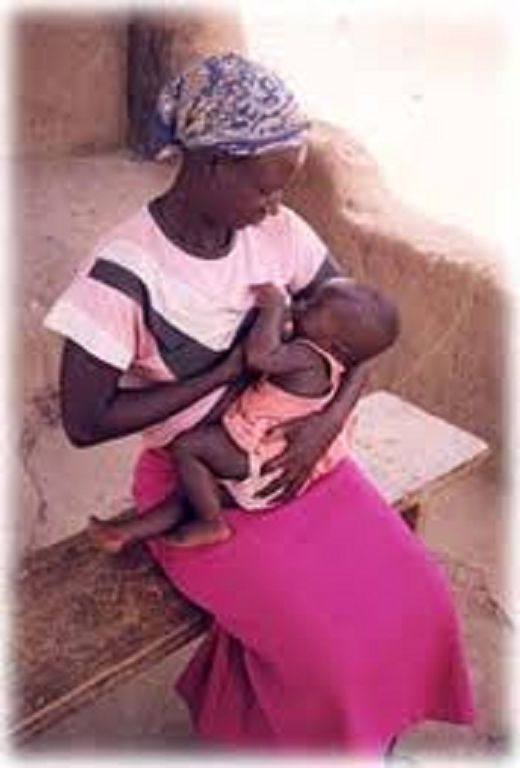
"The main task in promoting optimal breastfeeding practices is to provide women with the right information at the right time, matched to their own perspectives and situation."
This paper summarises research on specific interventions intended to improve four key breastfeeding behaviours that are strongly linked to the prevention of infant malnutrition and illness: early initiation of breastfeeding (ideally within the first hour after birth); feeding of colostrum to the newborn; exclusive breastfeeding for the first 0-6 months; and continued breastfeeding through the second year and beyond. The report emerged from the LINKAGES Project (1996-2006), which was funded by the United States Agency for International Development (USAID) to provide technical information, assistance, and training to organisations on breastfeeding, related complementary feeding and maternal dietary practices, and the lactational amenorrhoea method.
After an extensive literature review, LINKAGES identified 51 studies that met two criteria: having an intervention designed to influence one of the four breastfeeding behaviours; and reporting data on one or more of the four behaviours. Of the 51 studies reviewed, 24 were conducted in Latin America and the Caribbean, nine in Asia, four in sub-Saharan Africa, three in the Near East, one in the Newly Independent States, and ten in Europe and the United States.
An excerpt from the report outlining some of the key findings follows:
"National Policy Changes
Only one of the 51 studies reviewed here examined the impact of national policy changes. This study reviewed practices before and after the Kenya Ministry of Health implemented a breastfeeding promotion program, which included the adoption of a Code of Marketing of Breastmilk Substitutes, directives to all hospitals to stop distributing infant formula, the promotion of early breastfeeding, and training of health workers. After policy implementation, hospital policy-makers and maternity ward staff were more knowledgeable about breastfeeding and their practices improved dramatically. Clearly, more policy research is needed to determine if and how changes at the policy level affect breastfeeding behaviors.
Prenatal Education
...[S]ome results suggest that prenatal education, when combined with other interventions, (such as training of health providers, changes in hospital policies to allow early breastfeeding and contact with the newborn, and access to an outpatient breastfeeding support clinic), is associated with improved breastfeeding practices. One study found that mothers in their last three months of pregnancy who had access to health promoters had higher rates of exclusive breastfeeding at one, four, and six months postpartum. Other studies suggested that the same results can be obtained through the distribution of educational pamphlets. Yet other studies pointed to no impact.
Changes in Hospital Practices including Health Worker Training
There are numerous well-executed studies relating to the impact of changing hospital practices. On the whole, they suggest that:
- counseling (especially individual counseling) and discharge packs that are supportive of breastfeeding can have a dramatic and positive effect on exclusive breastfeeding rates,
- training of hospital staff in lactation management can likewise have a dramatic, positive effect on exclusive breastfeeding,
- once women are discharged from the hospital, home visits are influential in extending the period of exclusive breastfeeding, and
- changes in hospital practices influence early breastfeeding behavior but are less likely to have a long-term impact.
Mass Media and Print Materials
...Of the studies that were sufficiently rigorous to draw conclusions about impact, none of them singled out mass media relative to other interventions. Given the methodological limitations associated with these studies, it is not yet possible to draw conclusions about the impact of mass media on breastfeeding practices.
Peer Counseling and Education
A majority of studies lend credence to the notion that peer counseling and social support in general have a positive effect on the initiation of breastfeeding, the giving of colostrum, and exclusive breastfeeding. In particular, home visits appear to play a critical role in supporting women's breastfeeding behaviors and have been associated with longer durations of exclusive breastfeeding. In general, mothers visited more frequently are more likely to adopt recommended behaviors than those visited less often or not at all.
Women's Groups
Surprisingly little research has been conducted on the breastfeeding impact of support groups - whether groups are established expressly to encourage mothers to breastfeed, as in La Leche League groups, or whether groups have a different goal, for example, receiving credit or sharing information. One study, carried out by Freedom from Hunger in Ghana, strongly suggests that women who participate in 'Credit with Education' groups are more likely to give colostrum than women from the same communities who do not participate in the groups and women from comparison communities. Mean age at introduction of water and watery foods for participating mothers is also significantly lower.
Postpartum Counseling and Guidance by Health Workers
Evidence regarding the impact of postpartum counseling and guidance by health workers is mixed. For instance, in one study, counseling and referrals by community volunteer breastfeeding advocates did not increase the prevalence or duration of exclusive breastfeeding. In another study, individual counseling and monthly clinical support collectively contributed to higher rates of exclusive breastfeeding at six months postpartum. Clearly, more research on counseling is needed to identify what works in different settings. These studies should document the impact of various counseling approaches, provided by a variety of individuals, including breastfeeding advocates, community health workers and clinic-based staff.
The challenge for the future is to improve the quality of breastfeeding interventions to ensure that they are reaching priority audiences, providing support to mothers throughout the various stages of breastfeeding, conveying well-designed messages effectively, and measuring impacts on behavior. Programs also need to strive to sustain individual behavior change and educate and support new audiences.
Future Research
...Future research will need to carefully consider geography, methodology, and content. Almost half of the studies reviewed were done in Latin America. More research is needed in other geographical regions, particularly Africa and the Middle East. More rigorous studies are needed - ones that include baseline and follow-up data collection and information from program participants and controls. Just as importantly, well-designed operations research is needed to help identify which interventions and combinations of interventions change breastfeeding behavior.
Additional research is needed in seven key areas to address the following information gaps:
- Audience analysis to identify mothers most in need of breastfeeding education;
- Effectiveness of mothers' support groups (in isolation and in combination with other interventions) in promoting exclusive and continued breastfeeding;
- Influence of peer counselors on breastfeeding behaviors;
- Role of mass media in changing breastfeeding behaviors and sustaining behavior change;
- Feasibility of using interpersonal networks ('trend-setters,' 'positive deviants,' and 'early adopters') to diffuse optimal breastfeeding behaviors;
- Cost-effectiveness of programs; and
- Impact of changing national policies on the quality of services, breastfeeding behaviors, and providers’ knowledge, attitudes, and practices."
Image credit: C-Hub
- Log in to post comments