










































The Power of Video Advocacy: An Interview with the Hungarian Civil Liberties Union
Open Society Institute (OSI)
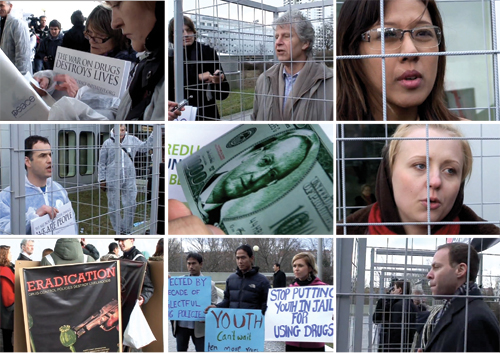
This interview with István Gábor Takács, Video Advocacy Program Officer at the Hungarian Civil Liberties Union (HCLU), explores the use of advocacy video to create change on drug policy issues in Hungary. As reported here, Takács and his colleague Péter Sárosi, who is the head of HCLU's drug policy programme, have produced more than 200 short advocacy videos since HCLU's founding in 2007. (Below, please find one example.) The interview highlights several reflections from HCLU's experience, such as:
- Ensure that videos are focused and clear in their content and messages - Takács says, "The main point is that you are doing advocacy and not documentary. So you have a really clearly set goal, and you focus on that. Usually we have some sort of argument: for example, the argument that safer injection sites work to reduce hepatitis, HIV, and other health risks associated with injection drug use....Basically, we just help the interviewees get across their point of view as well as they can. What is also really important is that both Peter and I work together on about 95 percent of the films we do. And we are both experts in drug policy and harm reduction....But we always approach our films from the mindset of the general population who may never have heard of the issues. We try to avoid jargon and make the message as simple as possible..."
- Planning before each video - Takács says, "We like going to conferences, because there we can get hold of a wide range of experts all in one place. Other than that, we also look at what the hot topics of the day are, or topics we have not yet covered, and want to show. The other part of the work we do is within the framework of the European Drug Policy Initiative...[which aims] to get together some European countries and fight for common goals and change in drug policy....Within the EDPI we work together with other activists to figure out what would be best for them and for the international audiences also....We improvise quite a lot....We often encounter situations that we were not expecting and things go in a completely different direction."
- Making videos effective - Takács says, "The most important thing is to make it short and simple....Avoid jargon and stay away from elitist language. Try to use humor....Try not to be boring with too many dull talking heads. Use B rolls (additional sequences showing context) and cutaways. Try to make it dynamic, using music....It's important to find a personal story. The stories of the people you are talking about....For example, when I went to Georgia to help an NGO [non-governmental organisation] there with a film, we interviewed a father whose son was in prison thanks to that country's policy of random drug testing on the streets. The son was the only breadwinner, so the family, refugees from Abkhazia, were really suffering. This helped get across the negative impact of existing drug policies..."
- Disseminating videos - Takács says, "Once the video is done we write a comment and upload them onto HCLU's YouTube channel...and then embed them from YouTube onto the Drug Reporter...website, and HCLU's other websites. We then distribute those page links via our colleagues and associates. We use Facebook a lot..."
- Assessing the impact of videos - Takács says, "The first way to see if they are being used, is the counts of views on YouTube....Whether the videos have actually changed anything, is harder to know. But we do have some examples of situations where it seems our films have contributed to concrete change....Generally, because of all our filming at the Commission on Narcotic Drugs [CND], the CND has become much more visible - now many people know what it actually is. We also tried to amplify the NGO voice there, as there are many great advocates trying to affect the system - but they were not shown to the public before....Lastly, we constantly get positive and constructive feedback from harm reduction and drug policy reform advocates, that our films inspire others to make their own advocacy videos..."
In concluding, Takács says, "To all of those who want to learn making videos: just start! With technology changing all the time, it's no longer that expensive....And it's not quality but content that really matters. Find ways to learn editing skills through friends, or if you speak English, there are very, very good online tutorials and forums. Sometimes you will experience technical difficulties but they can always be solved. You just have to be patient..."
Open Society Institute (OSI) News - May 20 2010; HCLU website, May 25 2010; and email from István Gábor Takács to The Communication Initiative on May 25 2010.

Comments

Nicely done
I think this is a good example of advocacy media and dessimination.
I think it's also important to point out the audience, and the objective. Who do you want to reach and why? Often NGOs want a fundraising, advocacy, and social marketing video all in one. It doesn't work. (I do this for a living.)
This particular video seems to help to reduce the stigma of drug use and encourage users to come to the center, but it also seems to be addressing the community at large-- in that it is talking about how it is reducing HIV infection among users and why needle exchange is a good social policy. If the latter is because your ultimate audience is the donor community, and your ultimate goal community support, I think there needs to be more attention to the fact that these folks are provided drug treatment and counseling if they desire, and a way out of addiction. Like it or not, this is what the people on the fence of support (or not) are thinking. Social norms are also at play, and not to get to deep into that, there is a danger when creating an "awareness" video that perception of the actual root problem (i.e. intravenous drug use) is strengthened as it is perceived as typical, common and the "norm." Just some food for thought.
So while most anybody can technically make a video, clear objectives on audience and target behavior/perceptions are essential.
- Log in to post comments