










































What Do Youth Savers Want? Results From Market Research in Four Countries
"After twenty years of research and practice on the subject, the economic development field finally seems to have accepted that poor people can and do save money. Yet for many development practitioners - as well as parents, teachers, and bankers - youth savings" is still an oxymoron."
Because data from financial institutions shows that youth in developing countries can and do save money, "What do youth savers want?" was the question the YouthSave project set out to answer through four market studies involving almost 2,500 respondents in Colombia, Ghana, Kenya, and Nepal. The research was conducted mainly with youth aged 12-18 but also included parents, teachers, and community leaders. "This paper summarizes the most important findings common to all four market studies, although it should be noted that there were many nuances that were specific to each country. This summary is meant to provide those interested in designing youth savings accounts with a set of plausible hypotheses to prove, refine, or disprove for their particular populations of interest - a head start in designing market research to understand the savings needs of youth."
Research shows that among in-school youth in the four countries studied, expenses included: school-related items such as clothing, food, and transportation; and contribution to household expenses, as well as discretionary spending including internet fees, phone cards, and sports and entertainment. For out-of-school youth, money for starting business was part of the savings and expenditures.
Informal savings gave youth the accessibility, simplicity, and privacy they sought for savings. Paperwork, including producing identity papers, was named as a barrier to savings accounts. Youth obtained information on saving and habits surrounding spending from parents, grandparents, and teachers, and savings groups, often organised through school.
The drawbacks to formal savings appeared to be barriers such as the need, in some countries, for an adult to open the account and have access to it. "A savings account by itself may therefore be of more limited value for youth, without complementary messaging or mechanisms designed to facilitate the constructive use of that account. These may include financial education, which aims to affect savings by increasing knowledge levels and shifting attitudes, or 'nudges' that target behavior directly, such as mechanisms that make savings automatic or encourage them through raffles or other rewards."
Other perceived problems involved in formal savings include the vulnerability of youth carrying money to and from banks and their obtaining money through inappropriate means, e.g., skipping meals, decreasing school attendance in order to work, or engaging in illicit or unhealthy work. "Appropriate messaging can begin to address both these issues: for example, providing youth clients with tips to keep themselves safe when carrying cash or visiting the bank, or fostering discussions about what does and does not constitute appropriate sources of saving. The marketing messages and incentives around youth savings accounts must also de-emphasize savings amounts, stressing instead the importance of the savings habit, regardless of the size of deposits. This approach to product marketing stems from an understanding on the part of the financial institution that the business purpose of a youth savings product is not to attract substantial balances but rather to acquire additional customers for the long term...Appropriately designed, market-responsive youth savings accounts could be one way to encourage this forward-looking impulse and safely channel it into smart financial behavior - helping youth to develop both the habits and the assets necessary to reach their goals."
The YouthSave project is supported by The MasterCard Foundation. YouthSave investigates the potential of savings accounts as a tool for youth development and financial inclusion in developing countries. The project is an initiative of the YouthSave Consortium, led by Save the Children in partnership with the Center for Social Development at Washington University in St. Louis (Missouri, United States), the New America Foundation, and the Consultative Group to Assist the Poor (CGAP).
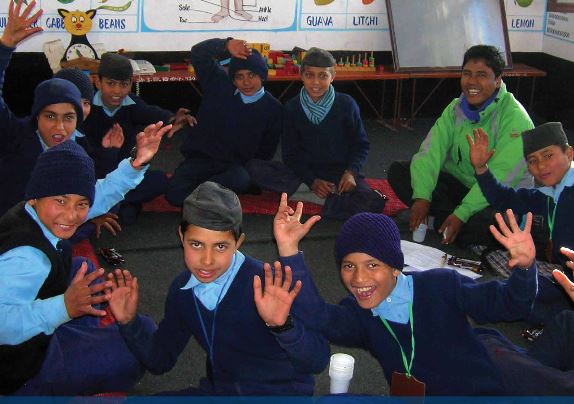
MasterCard Foundation website, September 9 2013. Image credit: Jaya Burathoki/Save the Children. Caption: A focus group of middle-school boys in Nepal shares thoughts on the design of a savings account as part of the YouthSave project.
- Log in to post comments