











































Alive & Thrive (A&T) in Ethiopia
In Ethiopia, A&T's advocacy, behaviour change, and private sector activities are grounded in the following strategies.
Strategy 1: A&T is working to: heighten attention to and resources for IYCF at the federal, regional, and district levels through an advocacy campaign; develop and disseminate an advocacy video and related materials to build support for nutrition within the Federal Ministry of Health; build partnerships to advance infant and young child nutrition by engaging women's associations as IYCF champions; and engage the media to improve awareness and coverage of nutrition and IYCF.
Strategy 2: Community-based activities are being implemented by the Integrated Family Health Program (IFHP) and in collaboration with other organisations in support of the government delivery system. These activities will involve, for example: enhancing supervision of health extension workers (HEWs); improving the communication and counselling skills of HEWs through enhanced counselling tools and capacity building; engaging family and community members through "community conversations"; reinforcing messages through the radio; using mobile phone technology to refresh and motivate HEWs; and conducting operations research of timed and targeted counselling by HEWs and peer mothers.
Strategy 3: Having observed that local foods often do not meet all of the nutritional requirements of children between the vulnerable ages of 6-24 months, A&T will conduct a stakeholder analysis and qualitative research on eating and consumer purchasing habits and test the acceptability of a lipid-based nutrient supplement (LNS) and consumers' willingness to pay for the product.
Strategy 4: A&T will evaluate the impact of the programme strategies as well as the process for delivering the interventions. Organisers conducted a baseline survey in 2010 of 3,000 children less than 5 years old and will carry out an endline survey in 2013 to evaluate the impact of the community component on IYCF practices and stunting. A&T will also assess the impact of A&T on the policy process, from agenda setting to policy formulation and change to policy implementation.
Children, Nutrition.
With areas of chronic food insecurity and high rates of infectious disease, Ethiopia has one of the highest rates of malnutrition in sub-Saharan Africa. Challenges include:
- 1. Limited recognition of sub-optimal IYCF practices: Breastfeeding is the cultural norm, but less than half of women practice timely introduction of complementary food. Almost half of children under five are stunted, yet there is limited recognition of the extent of the problem or the long-term consequences on learning capacity and economic productivity.
- Limited experience with preventive models: Nutritional interventions often focus on food distribution in emergency situations, with less emphasis on promoting specific behaviors to improve IYCF.
AED manages A&T, with funding from the Bill & Melinda Gates Foundation. Other partners in Ethiopia include: the Federal Ministry of Health, Ministry of Women's Affairs and various women's associations, World Vision, and the Integrated Family Health Program (funded by the United States Agency for International Development - USAID).
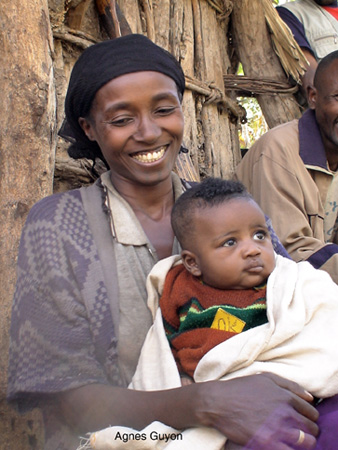
Ethiopia page on the A&T website, February 16 2011. Image credit: Agnes Guyen
- Log in to post comments