










































Background Paper for Identifying the Best Practice of ICT Implementations in Asia and the Pacific

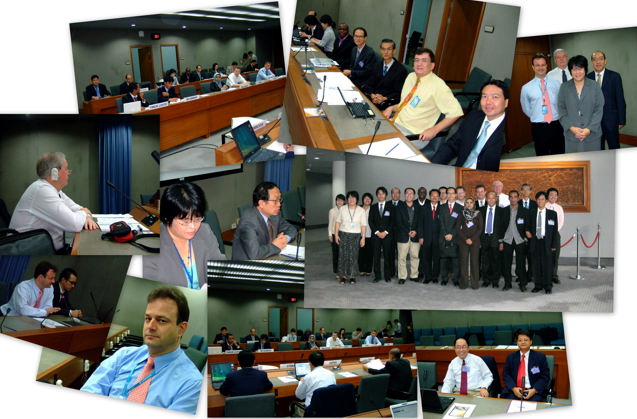
This 36-page paper describes and assesses major and strategic information and communication technology (ICT) projects that have been undertaken in Asia and the Pacific with a view to expanding ICT access. It emerges from an October 19-20 2009 meeting in Bangkok, Thailand, organised by the United Nations Economic and Social Commission for Asia and the Pacific (ESCAP)'s Information and Communications Technology and Disaster Risk Reduction Division (IDD). The "Sub-regional Workshop on Strengthening ICT Policies and Applications to Achieve MDGs and WSIS goals in South-East Asia and the Pacific" presented the findings of the in-depth research and analysis on the current status of ICT access in the region and examined policy options at the national level, taking into account new and emerging technologies.
The paper is a desk study and literature review of ICT projects in Asia and the Pacific based on project reports, annual reports, research papers, and case studies, with a focus on materials published from 2004 through to July 2009. The specific emphasis is on ICT connectivity as a foundation of an inclusive information society.
Recognising the digital divide as a criterion to measure the level of a country's readiness to take advantages of ICT for socio-economic development, a core section of the document examines ICT penetration in this region, using data from 2003 and 2008; the compound annual growth rate (CAGR) is applied in each category for the 5-year period.
Selected trends at the national level:
- The number of fixed telephone lines has grown very slowly compared with other communication means or has decreased in an increasing number of countries. In advanced countries, CAGR shows negative figures: Australia (-3.3%), Japan (-3.2%), Korea (-3.6%). It is assumed that those countries have been in the transition to wireless, broadband, or wireless broadband technology. Although 19 member states out of 51 show negative CAGR figures, some countries still depend on fixed telephone; high CAGR figures in terms of fixed telephone lines include Bangladesh (10.9%), Myanmar (13.4%), and Nepal (14.4%).
- "Mobile technology is one of the most rapidly expanding...in terms of the speed of expansion and reach to unconnected segments of population." CAGR figures for this medium in industrialised countries, including Australia, Japan, and Korea, has increased at stabilised rates of 7.8%, 5.0%, and 5.9%, respectively. "On the other hand, subscription rates have exploded in developing countries, often reaching or exceeding double digits." Afghanistan, Bhutan, and Nepal boast growth rates of 101.3%, 150.1%, and 105.0%, respectively. All the other countries which exceed triple digit growth, except Pakistan, are landlocked countries. These include Tajikistan, Turkmenistan, and Uzbekistan, with 115.1%, 103.9%, and 106.2%. These data "could imply that landlocked areas have more advantages of mobile technology implementation and deployment." The density of mobiles is still lower than other groups of member countries, such as in Nepal (11.3) and Turkmenistan (6.9). Another identified trend is a disparity in growth among developing countries and sub-regions. 2008 data show that coverage was relatively high in Kazakhstan, Azerbaijan, and Armenia, with 96.1, 75.0, and 61.0 per 100, respectively.
- "The average mobile subscribers among the ESCAP countries already exceeded 50 per 100 populations....However, there still are significant disparities and differential growth rates between more advanced countries and developing countries....For example, countries with high growth rates of mobile share are Bhutan (59.1%), Nepal (34.8%), and Myanmar (17.5%), while...[the growth rate in] Cambodia...[is] only 1% and Afghanistan...[only] 3.2%....However, the latter countries already had high...mobile share rates in 2003, including Cambodia with 94.1% and Afghanistan with 84.5%."
- The data in 2008 indicate that internet users per 100 populations are 77.83 in Korea, 69.22 in Japan, 67.28 in Singapore, and 62.57 in Malaysia. In contrast, in the same year, only 0.3 per 100 populations in Bangladesh, 0.5 in Cambodia, 0.1 in Myanmar, and 0.14 in Timor-Leste subscribed to the internet.
- Broadband internet at the national level: CAGR on the fixed telephone lines in many developed or advanced countries have shown slowdown: Singapore (16.7%), Japan (15.1%), Korea (6.3%). On the other hand, deployment of broadband internet seems to have increased rapidly between 2003 and 2008 in developing countries. Cambodia and Maldives show CAGR of 80.9% and 96.5%. Other non-least developed countries (LDCs) indicate similar growth rates for the same period. For example, CAGR is 169.7% in Azerbaijan, 252.7% in Kazakhstan, 103.5% in India, 232.2% in Iran, and 165.7% in Viet Nam.
Other data shared in the document indicate that there are distinctive trends by region and LDC groups. Thus, "[i]t can be assumed that those regions and groups may have similar situations and obstacles which prevent successful ICT deployment. The obstacles include geographical conditions, social exclusion, limited financial resources, and/or education levels....To find common challenges among the regions and groups and address the challenges, countries could cooperate with each other by sharing information and experiences."
In addition to strengthening regional cooperation - a horizontal approach - the document recommends a vertical approach: consolidating "seamless connections....Although adaptation rates of technology vary from a country to another, seamless and sustained network connections should be consolidated throughout the country. Therefore, various aid agencies need to carefully plan ICT initiatives to contribute to the big picture."
In conclusion, based on this research on the current status of the digital divide in the Asia-Pacific region, this report concludes that various countries still face numerous difficulties in terms of implementation of ICT initiatives, introducing ICT access, and assessing ICT access needs. It recommends holistic and comprehensive ICT implementation approaches among the developing countries of Asia and the Pacific based on the following guiding principles:
- When proposing ICT implementation, geographical features in Asia and the Pacific may be one of the most important factors. Thus, in order to share experiences, challenges, and good practices in common, regional cooperation should be further encouraged.
- Adopting appropriate technologies and maximising the benefits of existing infrastructure and initiatives will entail selecting and combining technologies, identified as a key solution to expand and sustain last-mile connectivity.
- Raising public awareness and creating demand are important factors to determine the sustainability of ICT initiatives.
In short, "Cost effective and socio-economically beneficial ICT applications contribute to reduce the social divide and improve quality of life through enhanced access to health services, sustainable development and other benefits of ICT; therefore, providing access to information and ICT services should remain a high priority in Asia and the Pacific."
Editor's note: Click here to access additional materials from the ESCAP workshop, such as an Information Note for Participants, Tentative Programme, Workshop Outlines, and Presentations and Documents.
ESCAP website, accessed December 9 2009.
- Log in to post comments