










































Beyond the Film: Innovations in the Participatory Use of Film at International Conferences on Climate
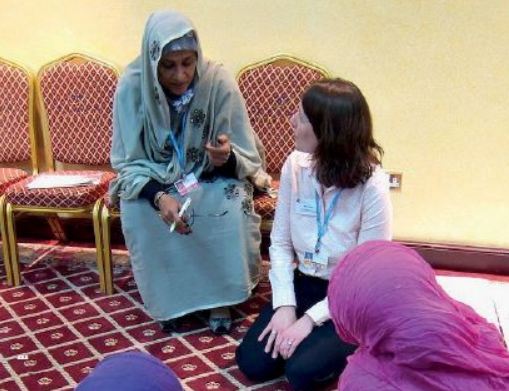
This 11-page report shares insights and discussion from the Beyond the Film Festival (BtFF) at Development and Climate (D & C) Days, held alongside the United Nations COP18 climate talks in Qatar. Participants engaged in an experiential peer-learning programme designed to explore how organisations can get more creative and possibly become more effective through the use of film. According to the report, film is a powerful medium, capable of kindling viewer emotions and evoking changes of mind and behaviour, and thus is a promising way of eliciting positive changes in addressing climate change. However, there is a need to examine unconventional and participatory approaches, as a way to engage people more effectively.
The report explains that to date, numerous organisations working in the climate and development field have employed film to engage with stakeholders, as evidenced in D & C Days film festivals prior to 2012. On the ground, researchers have illustrated the value of engaging key stakeholders in crafting their own key messages and making their own videos - for example, "From farmers to filmmakers" with Malawian subsistence farmers. Film is an increasingly accessible and affordable tool for disseminating climate and development information in the field; the next step is to understand how it can be used for improving decisions and action.
For the purposes of the festival and discussions, organisers identified films that were "conventional" following typical formats and approaches, and those that were "unconventional". Unconventional films were defined as videos that employed some kind of novel, innovative, or creative element. Techniques used in unconventional films included framing of an issue as a story, i.e. using fictional characters and suspense rather than framing the film as an expose or objective account of a situation. Other unconventional elements included animation, participatory filmmaking, and films with no spoken word. Screenings were combined with discussion sessions and creative exercises designed to generate new ways to convey key messages.
Taking a participatory approach proved successful: Compelling storyboards generated by participants demonstrated a clear interest in crafting climate and development-themed films. The surveys and corresponding activities had participants sharing insights and receiving feedback from both facilitators and fellow participants in real time. These interactive and experiential elements of the BtFF made for a dynamic learning environment and demonstrated the benefits of augmenting available opportunities to form dialogues with the audience, the stakeholders, and interested parties, thereby increasing engagement and helping messages to "stick". The conclusion is that there is clear value in injecting participatory elements into future climate and development conferences. The after-film feedback sessions allow people to share what worked and what didn't on a personal level, as well as in general within the climate and development field.
The report concludes that the new approach to the D & C Days film festival that was taken in 2012 was exciting and fruitful and opened up many avenues for further exploration, such as conducting participatory comparisons of conventional, currently in-use films to films that are experimenting with new and innovative techniques, like transmedia. Potential exists for these avenues to be explored in future iterations of the BtFF component of the Climate Centre D & C Days. In a world where economically poor communities are disproportionately faced with adapting to an increasingly unpredictable and changing climate, and where communication must advance on the edge of innovation in order to grab the attention of the audience, film is an important medium for facilitating adaptation and building resilience. To do this, film must improve - become more inventive, inclusive, engaging, and exciting.
Climate Centre website on March 5 2014.
- Log in to post comments