










































Can the world progress on Gender Equality when India and China do not progress at the pace required?
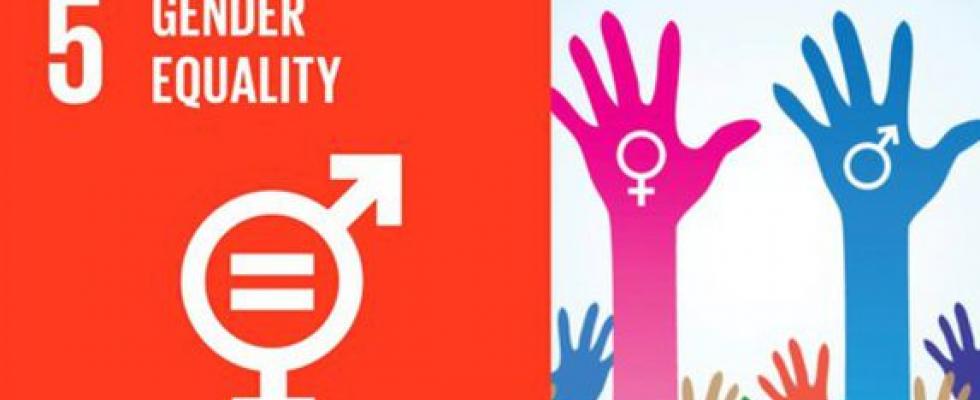
"Gender norms are deeply retrenched in both India and China, and are a deep barrier to achieving SDG 5."
Author: Ranjani K. Murthy, September 20 2019 - "The SDG [Sustainable Development Goal] tracker of the UN (https://sdg-tracker.org/gender-equality) provides data (to the extent available), on where different countries are placed on different SDG indicators. This article unravels the progress of China and India - two big economies in Asia and the world - on SDG 5 Indicators from the 1990s to the latest available year....The article argues that the world cannot achieve SDG 5 unless these two countries hasten the pace required. The article also tries to explore possible factors that explain the differences and similarities in progress/lack of progress that are seen between the two countries, and measures that may be required to achieve SDG 5. It argues that measures proposed by the governments are necessary, but not sufficient to achieve SDG 5.
Progress of India and China on SDG 5: Findings from the UN SDG tracker
The Target 5.1 "By 2030 End all forms of discrimination against all women and girls everywhere" has one indicator (5.1.1) namely 'whether or not legal frameworks are in place to promote, enforce and, monitor equality and non-discrimination on the basis of sex'. The SDG tracker records that both India and China have universal suffrage and mandates non-discrimination in hiring. India's Constitution mentions non-discrimination on the basis of sex...
The Target 5.2 "Eliminate all forms of violence against all women and girls in the public and private spheres, including trafficking and sexual and other types of exploitation" is tracked on two indicators....Data shows that the proportion of women who have experienced such intimate partner violence is higher in India (38.74% in 2016) when compared to China (25.46% in 2016)....There is no data on proportion of women and girls aged 15 years and older subjected to sexual violence by persons other than an intimate partner in the previous 12 months, by age and place of occurrence for both countries, showing huge gaps in data, which is the second indicator.
With respect to Target 5.3 "Eliminate all harmful practices, such as child, early and forced marriage and female genital mutilation", data...revealed that 25.3% of women in this age group [20-24] were married by 18 years as of 2016....If the same trend continues the figure of eliminating child marriage may not be achieved. There is no data on prevalence and trends in Female Genital Mutilation in India and China...
Target 5.4 states "Recognize and value unpaid care and domestic work through the provision of public services, infrastructure and social protection policies and the promotion of shared responsibility within the household and the family as nationally appropriate"....In...2018...,[w]omen in China spend on an average 241 minutes on unpaid work per day, while men spend 91 minutes on an average as of 2018. In the same year (2018) Indian women on an average spent 352 minutes on a typical day, while men spend 52 minutes....[B]oth the countries may not achieve shared responsibility for care work.
Target 5.5 affirms "Ensure women's full and effective participation and equal opportunities for leadership at all levels of decision making in political, economic and public life"....Proportion of seats held by women in national parliament in India is 11.8% as of 2017, with the comparative figure being 24.2% in the case of China....In both countries, the target of women's equal participation in parliament is unlikely to be achieved by 2030....[T]he tracker provides information on proportion of women in ministerial positions: India (18.5%) scores better than China (10%) as of 2016....Data on trends was not available, but the status 2012/2014 indicates that equality in proportion of managerial posts held by women and men is unlikely to be achieved by 2030...
Target 5.6 states "By 2030 ensure universal access to sexual and reproductive health and reproductive rights"...Data is not as yet available...
Target 5.A is "Undertake reforms to give women equal rights to economic resources, as well as access to ownership and control over land and other forms of property, financial services, inheritance and natural resources, in accordance with national laws". Data...was not available for India and China...
Target 5.B is "By 2030 enhance the use of enabling technology, in particular information and communications technology, to promote the empowerment of women"...[T]there is no data for both the countries.
With respect to Target 5.C: "Adopt and strengthen policies and enforceable legislation for gender equality", no data is available...
Government's perspective on progress on SDG 5: India and China
The Voluntary National Review Report of India, submitted by the Indian government in the UN High Level Political forum 2017 uses fairly different set of indicators to report on SDG 5 and not the ones that are part of the SDG5 targets and indicators (Government of India, 2017)....The only gap in performance that the Indian government admits to is female labour force participation, which it admits is low and has declined...
The National Progress Report of China, 2017, is more admitting of the lacunas like rural urban differences in gender equality, and gaps across region. Like the case of India, trends are not examined to arrive at a judgement of whether SDG targets will be achieved...
Observations
Thus it appears that both India and China are off the mark on most SDG 5 indicators for which data is available in the SDG tracker, with India being more so than China on most indicators (other than proportion of women in Ministerial positions). With these two countries, accounting for 36% of the population in 2019, unlikely to achieve SDG 5 by 2030 the chances of the world population achieving are also dimmer.
Yet another finding is that while constitution may uphold gender equality (like in the case of India), gender equality in practice requires changes in government policies, social norms, more of the state and collective units managed by women and less of the market. The primary motive of the market as an institution is to make profit, and is not geared to measures to promote substantive equality like providing access to child care, breast feeding spaces, flexible work space and timing, affirmative action in recruitment, training and promotion...
While both India and China have evolved a framework for achieving SDGs, there are not any drastic measures that have been suggested to facilitate progress towards SDG 5. What may be in order is to work with men and boys on gender norms, work with women not only as survivors of gender discriminators but also perpetrators, strengthening government provision of care, safe transport and essential services (like water, health, education etc.), incentive for choice marriages, joint registration of marital property apart from inheritance rights, 50% quotas for women in economic, political and socio cultural spaces, flexible working space and time and promotion of collective financial institutions, value chains and services. Vibrant democracy and state led development is a must."
References
Du, Fenglian and Xiao-yuan Dong, 2013 Women's Employment and Child Care Choices in Urban China during the Economic Transition Economic Development and Cultural Change Vol. 62, №1 (October 2013), pp. 131-155
Government of India, 2017, Voluntary National Review Report: India On the Implementation of Sustainable Development Goals, UN HLPF 2017, New York
Government of India and the United Nations, 2017, Sustainable Development Framework, 2018-2022, Government of India, New Delhi
Lily Kuo and Xueying Wang, 2019 Can China recover from its Disastrous one Child Policy, https://www.theguardian.com/world/2019/mar/02/china-population-control-…, The Guardian, March 2, 2019
People's Republic of China, 2017, China’s Progress Report on Implementation of the 2030 Agenda for Sustainable Development, Ministry of Foreign Affairs, People's Republic of China. http://www.chinadaily.com.cn/specials/China%27sProgressReport2(CN).pdf
People's Republic of China, 2016, China's National Plan on Implementation of Agenda for Sustainable Development, September, 2016, http://www.chinadaily.com.cn/specials/China%27sNationalPlan(EN)(1).pdf
The Organisation for Economic Cooperation and Development, 2019a, Social Institutions and Gender Index, People's Republic of China, OECD
The Organisation for Economic Cooperation and Development, 2019b, Social Institutions and Gender Index, People's Republic of India, OECD
United Nations, 2018, Measuring progress towards the Sustainable Development Goals, https://sdg-tracker.org/
World Bank, 2019, Labor force participation rate, female (% of female population ages 15+) (modelled ILO estimate) https://data.worldbank.org/indicator/SL.TLF.CACT.FE.ZS
Image credit: Development News
Editor's note: Above is a slightly edited and excerpted portion of a longer blog by Ranjani K. Murthy posted on Medium. Click here to read the full blog on Medium.
As with all of the blogs posted on our website, the content above does not imply the endorsement of The CI or its Partners and is from the perspective of the writer alone. We do not check facts and strive to retain the writer's voice, as is detailed in our Editorial Policy.
- Log in to post comments