










































Centre of Excellence for Civil Registration and Vital Statistics (CRVS) Systems
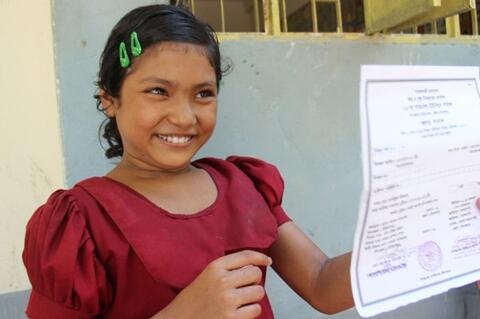
"Systematic reporting and registration of vital and civil events - including birth, death (and causes of death), marriage, and divorce - is critical for improving reproductive, maternal, newborn, child, and adolescent health and protecting human rights, including those of vulnerable groups, such as women and children....The information it holds can not only save lives, but also provide proof of legal identity facilitating access to essential services such as health care and education."
Housed at Canada's International Development Research Centre (IDRC), the Centre of Excellence is being established to serve as a global resource hub that actively works with expert groups to support national efforts to develop, strengthen, and scale up civil registration and vital statistics (CRVS) systems. Establishing a Centre of Excellence is a recognition of what is perceived as the importance of CRVS systems for development, and an example of a collective effort to bring about improvements. Its role is to facilitate access to technical assistance, global standards and tools, evidence, and good practice. A key audience of the project is stakeholders working in low- and middle-income countries (LMICs), mostly in Africa and Asia, with inadequate CRVS systems. The purpose is to ensure that decision-makers have access to reliable, real-time vital statistics for improved planning, policymaking, and progress monitoring - ultimately resulting in more effective services for citizens.
The Centre of Excellence is collaborating with the Global Financing Facility (GFF) to support CRVS systems' strengthening in countries working to improve reproductive, maternal, newborn, child, and adolescent health (RMNCAH) results. More specifically, it will coordinate with CRVS expert groups to help make technical support accessible to countries developing and/or implementing CRVS components in RMNCAH Investment Cases for health financing from the GFF. To that end, the Centre of Excellence will partner with countries, as well as with existing national, regional, and international expert groups, to support the development of strong CRVS components in these investment cases. It will also support stakeholders seeking guidance, knowledge, or expertise in order to implement and sustain CRVS system improvements. The goal: ensuring policymakers have access to better data for improved health planning and healthier populations.
To do this, the Centre of Excellence will work with the CRVS community of practice to generate, consolidate, and disseminate information by developing an electronic knowledge platform (not yet accessible as of this writing), making key tools and resources readily accessible. The Centre of Excellence will facilitate exchange of good practices and capacity strengthening, and will play a role in brokering access to technical assistance for countries requesting more direct support.
Peer learning is a key focus of the initiative. Here are some examples:
- The World Bank is leading on the development of a CRVS e-Learning course to support training on various aspects of CRVS systems, and with a view to developing expertise in this field, by working in close collaboration with the Korea Development Institute, the United States (US) Centers for Disease Control and Prevention (CDC), and the Global Civil Registration and Vital Statistics Group. In July 2016, the Centre of Excellence partnered with the World Bank to co-host a 4-day expert group meeting at IDRC in Ottawa. More than 50 experts from academia, international and regional institutions, and national civil registration agencies participated to present, peer review, and discuss the content of the course, which is being developed by a broad range of stakeholders representing the global CRVS community of practice. Once finalised (expected in 2017), the eLearning course will be hosted on the World Bank's Open Learning Campus.
- The Centre of Excellence and the World Bank also co-hosted the 7th meeting of the Global CRVS Group in July 2016, at which it was agreed to expand its membership beyond international and inter-governmental organisations (including United Nations (UN) agencies and multilateral development banks) to include initiatives such as the Centre of Excellence that have a clear mandate to support CRVS systems at the global or regional level. Recognising the growing number of organizations and initiatives working on CRVS (including the GFF and the Centre of Excellence), discussions at the meeting underscored the need for coordination and agreed to add a new objective to its terms of reference - namely, to strengthen national CRVS and related systems through coordination and collaboration on global and regional initiatives and exchange of information.
- The Centre of Excellence collaborated with the World Bank to convene key international and national CRVS stakeholders in Cameroon to undertake a Business Process Mapping and Analysis exercise that helped shed light on bottlenecks. The workshop generated a digital map of the CRVS system in Cameroon, tracing the steps to registration for two vital events in two different settings (birth in the community, birth in a health facility, death in the community, and death in a health facility). The process of jointly identifying and discussing bottlenecks and recommendations has helped to build some consensus around key priorities, and the Government is now working (as at time of this writing) to reflect these in their Investment Case, as well as to incorporate these into a national CRVS strategy. The Centre of Excellence also leveraged the workshop in Cameroon to support peer learning and exchange across countries. Participants included representatives from the national civil registration authorities in the Democratic Republic of Congo and Tunisia (both also representing systems in French-speaking African countries) who shared information on their own CRVS systems, as well as themselves learned from experiences and processes in Cameroon.
The following example illustrates how countries could benefit from information garnered through CRVS systems. The 'Community-Based Cause of Death Study Linked to Maternal and Child Health Program and Vital Statistics in Ethiopia' project is investigating effective methods to improve the collection of cause of death data. As part of government efforts to strengthen CRVS systems, the project is piloting a low-cost, high-quality cause-of-death data collection and monitoring system at the national level. A particular focus of the project is investigating the causes of maternal and child death. For most of the 220,000 children and mothers who die every year in Ethiopia, the causes of death are unknown. Fewer than 30% of Ethiopia's births and deaths are registered - in part because a significant number of deaths in developing countries like Ethiopia do not occur in health facilities. The lack of information makes evidence-based decision-making difficult. The project is part of the Innovating for Maternal and Child Health in Africa initiative, a seven-year (2014-2020) CAD$36 million initiative funded by Global Affairs Canada, the Canadian Institutes of Health Research, and IDRC.
Health, Rights
The United Nations (UN) estimates that one-third of the world's births and two-thirds of the worlds deaths are not registered or are incorrectly certified. Where global norms, standards, tools, and promising practices exist, they are not readily accessible and useable to those who need them most. Some of the other challenges countries face when developing or strengthening CRVS systems include:
- Lack of human and financial resources;
- Limited technical capacity;
- Fragmentation with the reporting and registration of different civil and vital events being collected and managed by different agencies or government ministries and not being integrated into a single system;
- Lack of systematic methods and a comprehensive approach for collecting and recording data;
- Variances among countries in maturity stages in developing and/or strengthening CRVS systems, with challenges in prioritising strategies and actions; and
- Unsustained political will to improve CRVS systems, with a limited understanding of its importance for improving health results.
In the words of Kristin Farr, Program Officer, Knowledge Translation, Maternal and Child Health, IDRC: "A CRVS system is really about good governance, and is fundamentally a government administration system/process that, depending on how functional it is, has the power to inform decision-makers in ways that can dramatically improve public policies and lead to development improvements. Having accurate and up-to-date birth, death (including causes of death), marriage and divorce registration data - and importantly the ability to generate statistics with this data - gives policy makers the ability to plan appropriate and relevant health interventions and investments (prevent deaths, improve quality of lives), education interventions and investments (know the demographic of populations in given regions to plan for #s of teachers and schools needed), ability to issue the documentation individuals require to access public services (school, healthcare, open bank accounts, apply for jobs, travel, etc.), protect rights (prevent child marriages for example, as well as generate electoral lists so that eligible individuals can vote in elections). Another nuance is that many of the indicators for monitoring the newest Sustainable Development Goals require functional CRVS systems...and so this theme is gaining traction at the global level as a real development priority."
Funded by Global Affairs Canada and IDRC, the Centre of Excellence works in close collaboration with the GFF, a key financing platform of the UN Secretary General's Global Strategy for Women's, Children's and Adolescents' Health (2016-2030). Housed at the World Bank, this Facility was launched in July 2015 in support of the Every Woman Every Child multi-stakeholder partnership movement and the SDGs. CRVS systems are a key area of focus for this effort. For more information on the GFF, including the list of countries invited to develop Investment Cases, please click here.
Emails from Liane Cerminara to The Communication Initiative on September 1 2016, September 14 2016, and September 19 2016 (including: emails from Kristin Farr and Ahmed Tareq Rashid; Centre of Excellence for CRVS Systems Creative Brief, June 5 2016; Centre of Excellence presentation (for eLearning workshop July 12 2016); CoE update for GFF IG meeting November 2016; and IDRC Proposal - CoE for CRVS Systems - July 20 2015), Centre of Excellence for CVRS Systems description on the IDRC website and IMCHA description on the IDRC website - both accessed on September 22 2016; and email from Kristin Farr to The Communication Initiative on November 24 2016. Image credit: Plan International
- Log in to post comments