










































Child protection requires leadership, community commitment
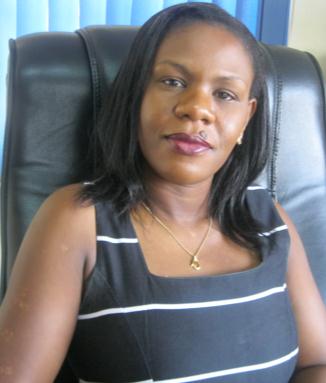
Author: Lilian Kiefer, November 29 2013 The media is always awash with reports of children being abused at homes, at schools or in other parts of their communities.
The situation is not any different in Mkushi District, in the Central Province [of Zambia]. During a recent stakeholder meeting on Child Protection in Mkushi, a planner in the Ministry of Community Development, Mother and Child Health (MCDMCH), Mr Mangala Bendictus, alerted the members from various sectors of the seriousness of child abuse in the districts, citing the 2013 data from the Ministry’s records, which shows that every week in Mkushi District there is at least one child who reports at the Victim Support Unit (VSU) with sexual abuse and at least two children per week reporting physical assault.
Such high levels of child abuse require commitment from various sectors across the district and beyond to address the problem. The most challenging fact with child abuse in Zambia and in Mkushi, in particular, is that, in most cases, children are abused in places that should be safe spaces for them, such as at home and school. In most cases, the perpetrators are people who should be protecting the children, like parents and guardians and teachers.
The unique situation in Mkushi that gives hope to the response against child abuse in the district is that at the centre of it is the District Commissioner [DC], committing to advance and support all efforts in the district to curb child abuse. While child protection should not be the responsibility of the State alone, there is need for committed leadership in the response, and this is what the Mkushi DC has pledged. The success of any development intervention lies in its ability to command the support of the societal leaders, be it at local, provincial, national or international level.
In addition, the need for coordination on issues of child protection is of paramount importance. Learning from Mkushi where various sectors - Education, Social Welfare, Health, Youth Department and others - all felt that need to be more and more coordinated because they were all targeting the same children but not talking to each other and not understanding what the other was doing. This creates a situation in which certain parts of the districts are overwhelmed by interventions while others are left out.
The DC called on schools, the church and parents to work together with traditional leaders to curb child abuse in the district.
According to Mr Mangala, there are more issues that require child protection, and some of them are issues such as dangerous behaviours that children indulge in. For instance, Mkushi district has recorded a large number of induced abortions among girls below the age of 20, accounting for 30% of all induced abortion cases in the district, signaling very high rates of adolescent sexual activity which require commitment to protect children from such vices. This indicates that children are engaging in dangerous or risky behaviours and there is need to protect them from such. In this case, whether the children realise the dangers of their behaviours or not, child protection interventions should start from raising awareness and [making] kids [conscious] of the dangers of their behaviours and supporting them to make better choices.
In order to support the efforts by the local leadership in the districts, Panos Institute Southern Africa (PSAf) has launched a project called 'Strengthening Child Protection Systems', which the organisation is implementing on behalf of Save the Children International in Zambia. With support from Save the Children, PSAf has partnered with Mkushi Radio to use radio as a platform where child protection issues can be discussed [for the purpose of] influence change - both behavioural and policy. These interventions are expected to promote community action in reducing child abuse and advancing community-owned child protection interventions.
Lilian Kiefer is the Executive Director of PSAf. For feedback, email lilian@panos.org.zm. This article was first published in the Zambia Daily Mail.
- Log in to post comments