










































Climate Scientists Must Engage Openly with the Media
SciDev.net
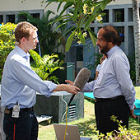
This editorial calls on the International Panel on Climate Change (IPCC) to keep lines of communication open between journalists and researchers.
In it, David Dickson reflects on the so-called "Climategate" debacle, which - in its latest iteration - involved a letter sent from the IPCC chairman to climate researchers working on the next global IPCC assessment indicating that they should "keep a distance from the media". After this statement became public - and, according to Dickson - widely criticised, the IPCC chairman said that he had used "a poor choice of words" that did not reflect IPCC policy. This incident thickened a controversy that erupted in 2009 in which scientists at the Climate Research Unit at the University of East Anglia in the United Kingdom were accused of withholding information they feared might undermine the scientific consensus on the growing threat of global warming. The investigations have also confirmed that some of the scientists' actions, such as deleting emails that might be subject to freedom of information requests, reflected a lack of openness. Those involved in "Climategate" have since been cleared of any scientific misconduct, but, according to Dickson, the affair has "led to the possible rethink in the way that it [the IPCC] operates - including its media policy."
Dickson explains that a review panel set up by the InterAcademy Council (IAC) has published recommendations on what the IPCC needs to do to restore credibility for its work - stressing that, in Dickson's words, "controversies over IPCC findings have largely arisen not from how climate threats were identified, but from how they were communicated....It is relatively straightforward to provide an accurate summary of the raw findings of a scientific paper....More difficult is promoting a balanced interpretation of the findings, as any press release will, almost inevitably, tend to favour the interests of the institution or organisation providing it." Thus, Dickson argues, in-depth contact between journalists and scientists is necessary so that research findings and their implications can be openly discussed and adequately represented.
In concluding, Dickson warns that gatekeepers can inadvertently mean that communication doors are closed between scientists and journalists, especially in developing countries. He cites as an example, the experience of a SciDev.Net contributor who asked for contact details of African scientists nominated to the IPCC working groups. An IPCC media officer reportedly indicated that requests for contact with participating scientists should "come through the media and communications team", and that no details would be provided until the scientists concerned had been trained in working with the media. Dickson points out that "in developing countries, which can lack a tradition of institutional support for links between journalists and scientists", this kind of gatekeeping approach "could actually widen the gap between the two, particularly if the media training is not forthcoming."
SciDev.Net Weekly Update, September 6-12 2010. Image credit: United Nations Framework Convention on Climate Change (UNFCCC).

- Log in to post comments