










































Communication for Development: A Practical Guide
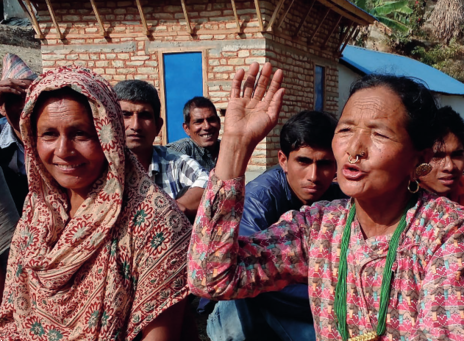
"Development is a communicative process. Communication tools are vital for the political dialogue and awareness-raising required to bring about social and institutional reforms. This...handbook...shows how these tools can be used effectively." - Manuel Sager, Director-General, SDC
This Swiss Agency for Development and Cooperation (SDC) manual explains the basic concepts and provides practical methods for systematic planning of communication for development (C4D). The first two parts of the handbook outline methods and concepts, showing how communication can be planned according to the context and integrated into the project cycle. C4D is defined here as "a tool for social and political transformation. It promotes participation and social change using the methods and instruments of interpersonal communication, community media and modern information technologies. C4D is not an add-on, but rather a cross-cutting activity in project management, aimed at strengthening dialogue with beneficiaries, partners and authorities in order to enhance local ownership of programmes and generate a sustainable impact."
The third part recounts the SDC's experiences with C4D in Africa, Asia, Europe, and Latin America. A few of the examples provided include: the documentary video catalysing reforms in Georgia's sheep-farming sector, the puppet festival promoting girls' right to enrol in school in Benin, the thematic week advocating for human rights in Afghanistan, and the interactive web game raising awareness of responsible water use in Colombia. The case studies from 24 SDC countries show the wide range of applications of C4D: from behaviour change to political participation and with methods including community theatre and much more. The wide variety of tools range from ad-hoc discussion forums in the marketplace to elaborate multimedia campaigns covering an entire country. "Diverse as they are, they share one characteristic: the idea that communication for development is first and foremost about a process, rather than a product." (Manuel Sager, from the opening editorial).
Following the editorial, contents include:
I. Communication for development: basic principles
- What is C4D and how can we distinguish it from institutional communication?
- What are the key features of C4D?
- What is C4D for?
- What tools are available to C4D?
- A brief history of communication
- How do social media contribute?
II. C4D in the project cycle
Integrating C4D in the project cycle
The communication cycle
- Phase 1: Identification of needs and goals
- Phase 2: Strategy design
- Phase 3: Implementation
- Phase 4: Monitoring and evaluation
III. Best practices in C4D Table of contents
- Recent C4D experiences of the Swiss Cooperation Offices in Africa, Asia, Europe and Latin America
Annexes
- Annex 1: The Rome Consensus, 2006
- Annex 2: Basic structure of a C4D strategy
- Annex 3: Key questions to build a C4D strategy
- Annex 4: Useful web links
English and French
78
SDC website, April 12 2017.
Comments

C4D Literature
Thank you authors and SDC for an insightful publication on C4D. The need for more literature on C4D cannot be over emphasized. I urge all C4D experts, development partners and communication experts in general to be deliberate and intentional about sharing with the world their experiences and thoughts on C4D. The poverty of C4D literature is even more appalling in Africa, evidenced by the lack of C4D education in most academic institutions. This needs to change.
Skha
C4D Enthusiast
Zimbabwe.Africa
- Log in to post comments