










































Community Mobilization to Strengthen Support for Appropriate and Timely Use of Antenatal and Postnatal Care: A Review of Reviews
University College Dublin (Dada, Gilmore); World Health Organization, or WHO (Tunçalp, Portela, Barreix)
"Since the Alma Ata Declaration that prioritized community participation in health care, programs and policies that include community members in all aspects of health care have been widely advocated for within MNH [maternal and neonatal health]....Community mobilization approaches are amongst these strategies..."
The perceptions, support, and involvement of a woman's partner, family, and community members influence uptake and use of antenatal care (ANC) and postnatal care (PNC). As such, community mobilisation techniques have been used to both support health promotion and educational programming for ANC/PNC, as well as increase acceptability and accessibility of the interventions. The purpose of this systematic review of reviews is to synthesise existing evidence on which community mobilisation strategies are effective in increasing family and community support for appropriate and timely use of ANC and PNC in low- and middle-income countries (LMICs).
Eligible reviews of published literature included, but were not limited to, literature reviews, narrative reviews, realist reviews, systematic reviews, scoping reviews, and qualitative evidence syntheses. Only studies published on or after 2000 were included. Six databases (MEDLINE, Embase, CINAHL, PsychINFO, Cochrane Library, and PROSPERO) were searched between January 28 and 15 February 2021, with an updated database search conducted on September 2 2021. Included reviews were critically appraised according to the Joanna Briggs Institute (JBI) Checklist for Systematic Reviews and Evidence Syntheses.
Twenty-three papers representing 22 reviews, ranging in size and scope, were included in the review. Table 3 in the paper highlights some key characteristics and details the interventions and findings of interest. While all 22 reviews contained some description of community mobilisation and ANC/PNC, 13 presented more in-depth details on the community mobilisation processes and relevant outcomes.
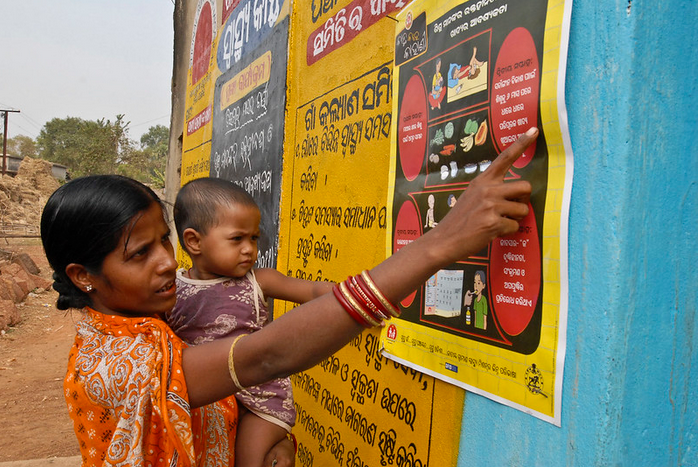
The community mobilisation activities described by the reviews ranged from informative, passive communication to more active, participatory approaches that included engaging individuals or consulting local leaders and community members. Some activities place a focus on problem solving and finding solutions, such as groups using the participatory learning and action (PLA) cycle, where a trained facilitator leads regularly scheduled meetings to identify and adopt strategies in the community to improve maternal health. Other activities involve participatory techniques to mobilise communities for immediate action, such as community awareness meetings featuring street plays, dramas, dances, music, folksongs, skits, games, and other participatory learning activities and methods held to increase demand for maternal health services. Still other activities (e.g., mass media, posters, etc.) involve informing or educating communities. Table 4 summarises some of the community mobilisation strategies for ANC/PNC described in the included reviews.
Overall, 16 reviews reported at least one positive association between community mobilisation activities and ANC/PNC uptake, while five reviews presented primary studies with no statistically significant change in ANC uptake, and one included a primary study with a decrease in use of antenatal facilities. However, as the researchers discovered, the majority of reported findings in the literature highlight community mobilisation's positive influence on ANC/PNC use, but the papers tend to lack information on the processes to explain this association. That said, the researchers present the figure below to illustrate which components and strategies from community mobilisation activities could possibly influence behavioural beliefs, normative beliefs, and control beliefs that would increase community support for ANC/PNC uptake.

Some general recommendations gleaned from the reviews include:
- It is important to incorporate local knowledge and tradition into community mobilisation methods and communication materials; working with community leaders in the development and implementation of information, education, and communication (IEC) can be helpful in this regard. One example rolled out for child health in South Asia is the United Nations Children's Fund (UNICEF) Meena communication platform, which used the animated character of "Meena", a young South Asian girl, to communicate health messaging in an entertaining and relatable format. Adapting community mobilisation strategies through the involvement of local stakeholders in the design process enables the contextualisation of materials and programming.
- Normative beliefs are swayed by social and community influences, highlighting the relevance of community mobilisation strategies that seek to reach not only pregnant and postpartum women but also the partner, their family, and friends.
- Beliefs about the level of control individuals have are where empowerment of individuals - and particularly pregnant and postpartum women and parents - becomes more impactful. This stream goes beyond the involvement and consultation of pregnant women. Beginning with education, the community mobilisation approach could then expand to include establishing women's groups that focus on maternal and child health (MCH) activities. For example, one methodology described by multiple reviews is Warmi, first introduced by Save the Children in Bolivia in 1990. Used in women's groups, this multi-step PLA cycle has been found not only to provide beneficial peer support but also to empower women to make decisions and take action to implement local solutions for the challenges they face with regard to their and their baby's health. Specifically, women taking part in Warmi can play an active role in planning how their own priorities would be addressed by developing educational materials and strategies alongside local authorities, bolstered by involvement of the community and women in participatory evaluation practices.
Looking ahead, the researchers note that the complexity of interventions implemented across scales and settings, as well as the lack of information on implementation processes, suggests the need for further studies that provide additional detail on community mobilisation's implications for ANC/PNC support and uptake. Furthermore, the relevance of context in community-based interventions points to the importance of considering localised and country/region-specific findings, especially when applying lessons learned from global trends across settings.
Finally, in order to guide eventual implementation, this review of reviews calls for programmers and researchers to clearly define and explain the strategies and processes used to mobilise a community, because "there is ambiguity surrounding the various definitions and what qualifies as 'community mobilization,' and there is often overlap with additional terms such as 'community engagement,' 'community consultation,' or 'community participation'....[This article] therefore calls for those in the field to harmonize definitions of this work, and to more robustly document and report the operationalization and processes....This documentation can then guide and support evidence-informed implementation of community strategies for ANC/PNC as well as wider maternal and child health."
Journal of Global Health 2011;11:04076. Image credit: Pippa Ranger/Department for International Development via Flickr (CC BY 3.0)
- Log in to post comments