










































Connecting ICTs to Development: The IDRC Experience
International Development Research Centre (IDRC)
"Engaging developing-world universities, NGOs [non-governmental organisations], national policy activists and others in research about ICTs in development was the special IDRC niche."
This collection highlights over 15 years of IDRC-supported research through its information and communication technology for development (ICT4D) programme. Beginning as local-level pilot projects in Africa, Asia, and Latin America and the Caribbean, the initiative grew to include multi-country national networks and, eventually, global projects addressing ICT and development policies. From 1994-2011, the ICT4D programme initiated over 1,000 projects and commissioned the formation of research networks such as: Research ICT Africa, DIRSI, LIRNEasia, PANACeA, Pan Localization, ANLoc, PANdora, OpenNet Asia, Privacy in Asia, OpenAir, OASIS, RED GEALC, and LOGin - to name but a few. Amongst the purposes of these networks:
- fostering knowledge sharing
- enabling more scope for research activities
- ensuring capacity building
- developing resilience and risk mitigation through peer support and mentoring
- facilitating changes in policies and practices.
In brief, as various chapters within the book reveal, the programme's strategies involve:
- Developing local skills, capacities, and applications in order to build experience, competence, and new local ICT solutions rather than relying on "expensive, cumbersome and inappropriate systems from the developed world."
- Accelerating interaction with ICT tools and solutions "before the 'premium' markets there opened up to competition and broad-based adoption."
- Facilitating innovation with ICTs in sectors such as health, education, and small business in an effort to foster the adoption of appropriate ICT solutions in pro-economically-poor segments of the society and economy.
- Supporting partners (not just projects) by working to build institutional capacity and sustainability, as well as sponsoring effective applied research for development interventions.
This excerpt from the introductory chapter of the book highlights some of the specific communication strategies underlying the programme's approach: "Along with multi-phase support to research networks [many of which are described in the book] and remaining open to new ideas and new partners through small grants competitions, the field building approach used by the ICT4D program at IDRC includes several other elements, some of which are the following:
- Supporting the formation of ICT4D journals
- Hosting and supporting conferences on important ICT4D research themes
- Providing mentoring, training and applied research opportunities for young researchers."
The book's structure covers 4 broad thematic areas:
- Introduction to ICT4D at IDRC
- Catalysing access to ICTs
- Sectoral applications of ICTs
- Engaging in ICT4D research
Specifically, the chapters are as follows:
Introduction - From Heresy to Orthodoxy: ICT4D at IDRC Part I, by Richard Fuchs
Introduction - From Beginning to End to Beginning Again Part II, by Katie Bryant, Laurent Elder, Heloise Emdon, and Richard Fuchs
Chapter 1 - Catalyzing Access through Social and Technical Innovation, by John-Harmen Valk, Frank Tulus, Raymond Hyma, and Florencio Ceballos
Chapter 2 - Catalyzing Access via Telecommunications Policy and Regulatory Research, by John-Harmen Valk and Khaled Fourati
Chapter 3 - Access to Knowledge as a New Paradigm for Research on ICTs and Intellectual Property, by Jeremy de Beer and Sara Bannerman
Chapter 4 - ICTs and Social Inclusion, by Chaitali Sinha and Raymond Hyma
Chapter 5 - Access and Usage of ICTs by the Poor (Part I), by Kathleen Diga
Chapter 6 - Local Economic Opportunities and ICTs: How ICTs Affect Livelihoods (Part II), by Kathleen Diga
Chapter 7 - Research on eHealth across Health Systems: Contributions to Strengthen a Field, by Chaitali Sinha and Dominique Garro-Strauss
Chapter 8 - Making the Grade: The Role of ICTs in Providing Access to Knowledge, by Ahmed T. Rashid, Alioune Camara, Maria Ng, and Alicia Richero
Chapter 9 - E-Government for Development: ICTs in the Public Sector and the Evolving Citizen–Government Relationship, by Tara Fischer, Matthew L. Smith, and John-Harmen Valk
Chapter 10 - Innovations in Evaluating ICT4D Research, by Sarah Earl, Chaitali Sinha, and Matthew L. Smith
Chapter 11 - Conclusions: A Decade of Innovation that Matters, by Richard Fuchs and Laurent Elder
Epilogue - Into the Future: New Opportunities and Threats in a Global Networked Society, by Laurent Elder
Author Biographies
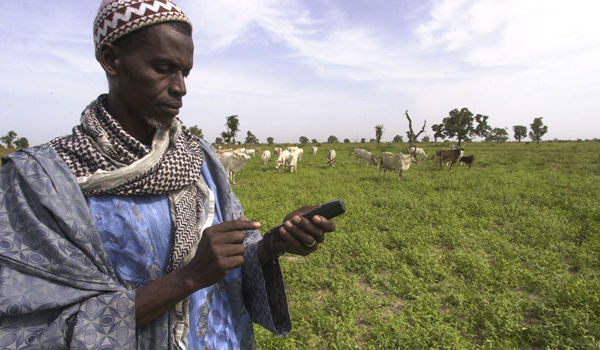
"Throughout the chapters of this book, the introduction of the mobile phone into local economic development, healthcare, local government and distance learning, among others, is a major theme emerging from the research supported by IDRC. This response to a local advantage helped prevent the type of digital colonialism that might have arisen had local skills and capacities not been developed."
One conclusion: "Applied research for development in the global south can help guide the policy making process for a more beneficial, inclusive and sustainable future society and economy there."
Click here for the 299-page book in PDF format.
More research results and analysis can be found on the companion website.
IDRC's post-2011 support of emerging ICT4D research is now part of its Information and Networks (I&N) programme.
Email from Kelly Haggart to The Communication Initiative on July 11 2014; and Connecting ICTs to Development: The IDRC Experience website, July 17 2014. Image credit: IDRC/Djibril Sy
- Log in to post comments