










































Enabling Legal Environments for Effective HIV Responses: A Leadership Challenge for the Commonwealth
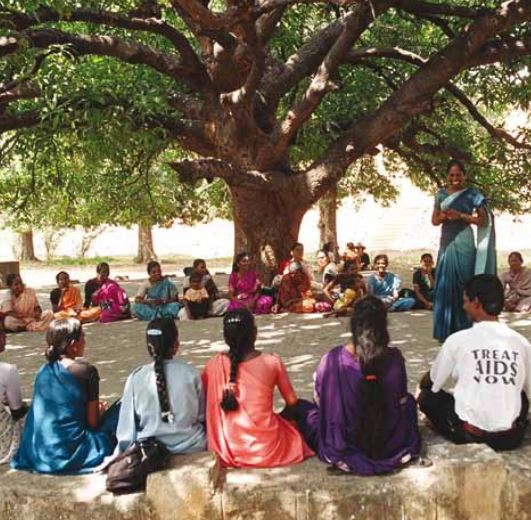
This report was developed as a component of a project that aims to contribute to the creation of enabling legal environments in Commonwealth countries (visit Wikipedia to view a list) to ensure universal access to HIV prevention, treatment, care and support services. It describes developments affecting legal environments related to people living with HIV and AIDS (PLWHA) and most-at-risk populations (MARP), including women and girls, sex workers, men who have sex with men (MSM), transgender people, and people who inject drugs. It provides examples of human-rights-based approaches and sets out an agenda for action relating to advocacy, community mobilisation, law reform, and law enforcement. The report is the result of a partnership between the Commonwealth Foundation and International HIV/AIDS Alliance (Alliance) in collaboration with the Commonwealth HIV and AIDS Action Group (CHAAG).
An excerpt from the Executive Summary follows:
"There is a trend towards using punitive laws to address HIV....These are dangerous developments that will lead to more people being infected with HIV, not fewer....Leadership from government and civil society is required to reverse this situation in Commonwealth states.
...Where laws protecting human rights are in place, people living with HIV and most-at-risk populations are better able to access HIV services and participate in prevention, treatment, care and support programmes without fear of arrest or prosecution...
...Greater coordination between law and health ministries is required. Law ministries can provide leadership by supporting efforts of the judiciary, prosecutors, police and the legal profession to create human rights-based legal frameworks for more effective national HIV responses. An approach is required in which law ministry officials and police work in partnership with communities of people living with HIV and most-at-risk populations to prevent HIV and combat stigma...
Efforts to improve legal environments can be focused at three levels:
- Empowerment of communities to influence laws and policies and to access the legal system - ...Advances in responding to HIV can be made where affected communities have been educated in rights-based approaches and mobilised to claim their rights and influence policy agendas. Legal aid services and human rights monitoring support a community empowerment approach.
- Law enforcement - ...Police harassment of sex workers, people who inject drugs, transgender people and MSM can be a significant barrier to effective, peer-based HIV responses.
- Law reform, which requires long-term commitment - Punitive laws that undermine HIV responses should be repealed. Laws promoting gender equality and providing protection from gender-based violence, discrimination and human rights violations should be enacted....In advance of and in addition to law reform, pragmatic solutions can be negotiated at the operational level by working in partnership with local police, judges, magistrates and community leaders."
AIDSTAR-One HIV Prevention Update, January 2011 and the HIV Policy website, September 5 2014.
- Log in to post comments