










































Evaluation of the Galli Galli Sim Sim Mobile Community Viewing on Children's and Parents' Health Outcomes
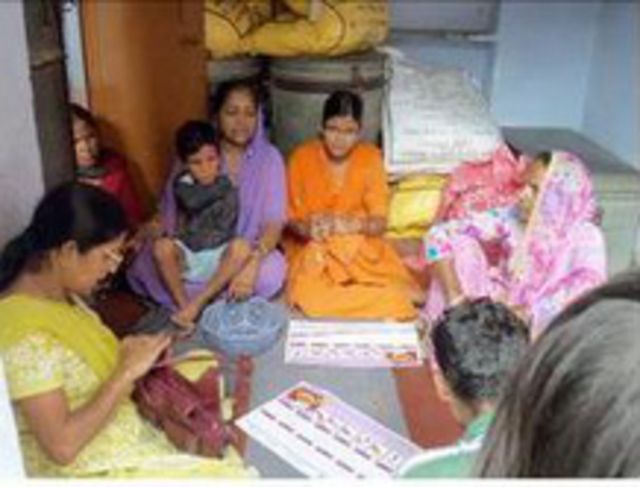
In February 2010, Sesame Workshop in India launched a healthy habits campaign as part of Galli Galli Sim Sim (GGSS). The campaign included a press launch and three components: on-air (13 weeks of GGSS), online (a dedicated health page on the GGSS website), and on-ground - which is the focus of this presentation. A mobile community viewing (MCV) programme was initiated as a component of GGSS, a broad-based, multimedia educational initiative for young Indian children modelled on Sesame Street, the United States (US)-based Sesame Workshop's entertainment-education series for preschoolers. Trained local promoters roll a repurposed, GGSS-branded vegetable cart carrying a television set and a DVD player through the slum neighbourhoods. Selected episodes and segments were combined to create compilations for the mobile community viewing. The television broadcasted a compilation of the television show's segments on health and nutrition, followed by distribution of educational materials to children and caregivers. In addition, activities such as mask-making and theatre activities were carried out to engage the children further.
The objective of the first visit was to increase use of hand washing with soap and to convey understanding of the correct order of the sequencing of hand washing steps. Children received a hand washing steps card set, and parents received a calendar with a hand washing message. The second objective was to improve understanding of healthy foods and promote recipes that incorporate fruits and vegetables. Children received a small colouring book, and parents received a recipe card.
During the first phase of project implementation in Jaipur, the implementers identified the importance of direct interaction with caregivers for ensuring behaviour change at home. During the second phase, the activities included community meetings to spread the messages with adults. The meetings covered aspects such as the need for including nutritious food in the child's daily diet, ensuring morning routines before the child goes to school, and following healthy habits at home.
The goal of this intervention, held in 2010, was to encourage parental involvement and family engagement in developing healthy habits in children. 205 households (99 in the treatment group and 105 in the control group), consisting of one child per household between the age group of 5-6 years and their caregivers, participated in the research. Two groups were measured before and after one of the groups was exposed to the intervention. The treatment group was matched with the control group based on demographic characteristics such as gender, age, socio-economic classification (SEC), and other observables.
Results showed that exposure to MCV had a positive and significant effect on the usage of soap prior to eating, the presence of soap in the house, and identification of vegetables at p=0.1, 0.06, and 0.03, respectively. The average gains were in the range of 16% for populations exposed to the intervention, which was almost twice that of the control group. Results also showed higher improvements for the exposed group for presence of soap in households, with an average improvement of 10% amongst the exposed group when compared to a 4% improvement in populations unexposed. The percentage gains made: 6%.
Children and caregivers who participated in the MCV activity showed greater gains in their attitudes and practice of using soap, washing hands, and making soap available at home. Children also showed an increased ability to identify vegetables. Improvements in health and hygiene are critical to child survival and wellbeing, while the ability to identify vegetables is a critical factor enabling children to make healthier eating choices.
In conclusion, the presentation notes that exposure/assignment to the GGSS's MCV is associated with increases in children's knowledge of sources of milk (calcium), healthy foods, and steps of handwashing - as well as with caregivers' knowledge of vegetables, after controlling for additional factors. However, although there were improvements from pre-test to post-test, assignment to GGSS MCV is not associated with increases in caregivers' attitudes and practices after controlling for additional factors.
Please see contact information below to request a copy of the full PowerPoint presentation in PDF format, as well as access to a related report (which also informed this summary).
Emails from Jenna Cambria to The Communication Initiative on June 27 2012 and July 18 2012; and "Promoting Healthy Habits for Life in India: A Project Supported by the Metlife Foundation", December 2010. © 2012 Sesame Workshop. "Sesame Street" ® and associated characters, trademarks, and design elements are owned and licensed by Sesame Workshop. All Rights Reserved.
- Log in to post comments