










































Evaluation of the Social Mobilization Component of the Second Year of Life (2YL) Project on Immunization Coverage in Adaklu District, Ghana
University Ghana School of Public Health
"The implementation of the social mobilization had a positive effect on immunization coverage in the district."
Studies have shown that the effectiveness of social mobilisation in improving immunisation coverage and health services in communities can be attributed to the involvement of communities in the implementation of health campaigns, where they take ownership of the process, help contextualise activities of the campaign, and relate the programme to the needs of their local communities. This study evaluates the impact of social mobilisation components of a project designed to increase childhood immunisation coverage in Adaklu district, Volta region, Ghana.
The context for the project is as follows: Ghana has had relatively high immunisation coverage of more than 85% for infant antigens in the first year of life. However, there is a decline in immunisation coverage for vaccines provided during the second year of life (2YL), including for the second dose of the measles-rubella vaccine (MR2). One problem is that many caregivers are unaware of the need for this second dose, do not know the recommended age for the vaccine, or do not see MR2 as important as vaccines in the child's first year of life. Thus, there is a needed shift in messaging to caregivers from public health professionals to spark behaviour change. As part of a 2YL project implemented in Ghana with support from the United States (US) Centers for Disease Control and Prevention (CDC), social mobilisation strategies were used to help improve coverage for vaccines provided in the 2YL of a child.
Implemented between September and December 2017, the social mobilisation intervention included: creating 2YL communication messages (which went through the drafting stage, pre-testing, and validation stages), producing 2YL jingles, training frontline health workers on social mobilisation, engaging stakeholders, and launching the 2YL campaign with media attention. The community-based activities - namely, community durbars (events where Ghanaian traditionai rulers sit in state and meet their people), church/mosque outreach, market/lorry station outreach, radio/information centre and/or mobile van education, community video shows, door-to-door sensitisation, defaulter tracing, and referrals - were designed to raise awareness of and demand for 2YL services.
Civil society organisations (CSOs) were an integral part of the social mobilisation component of the 2YL immunisation project. CSOs were charged to engage communities and local actors through social mobilisation strategies to raise community awareness on vaccination services (MR2 and meningococcal (MenA) vaccines) provided during a child's 2YL and to promote awareness of other services provided during the 2YL, including catch-up vaccination, growth monitoring, bed net distribution, and vitamin A supplementation.
A single-group pretest-posttest design was utilised to assess whether there was a significant change in immunisation coverage pre- and post-intervention. Data on health facilities' immunisation coverage were collected from DHMIS II (District Health Management Information System) before (2016), during (2017), and after (2018) the intervention. The Pearson chi square, fisher's exact, Wilcoxon sign rank test, and paired t-test were used to evaluate the impact of the intervention on the third dose of the Pentavalent vaccine (Penta3), MR1, MR2 and MenA.
The study revealed that social mobilisation contributed to improved coverage for Penta 3, MR1, MR2, and MenA. For example, the annual district immunisation coverage for MR2 increased from 73% in 2016 to 84% in 2017 and 82.5% in 2018. However, social mobilisation was only statistically significant in contributing to improved coverage for MR1 and MenA vaccines. Further, the study found that the implementation of social mobilisation contributed to improving the dropout rate at the facility level, with the majority of the health facilities in the district recording either no dropout rate or a negative dropout rate. (This implies that in the year after project implementation, the number of children immunised for the MR2 vaccine in health facilities exceeded the number immunised for MR1 vaccine.) The researchers take this finding to be an indication that there were under-5 children within the district that had defaulted on MR2 vaccines in previous years, but that, through the social mobilisation activities, these children were either referred for immunisation or were taken for missed vaccines by caregivers as a result of some form of education or information they received.
Among the limitations of the study that are outlined: The evaluation assumed that factors that influence immunisation coverage and dropout rate were constant before intervention and after the intervention - that is, that the only factor that changed was the implementation of 2YL social mobilisation strategies in 2017. Therefore, the results of the evaluation can only be interpreted based on this assumption.
In conclusion: "The implementation of social mobilization can be a good strategy for improving immunization coverage while helping achieve the global immunization strategy of leaving no child behind. This is because social mobilization can positively have effects of educating and sensitizing individuals and households on the need for immunization and the fact that immunization is a continuous process beyond age one of the child."
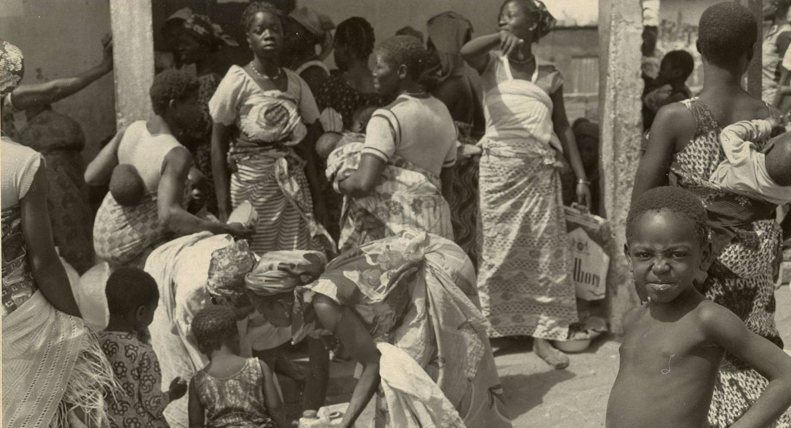
International Journal of Health Services Research and Policy, vol. 7, no. 1, pp. 1-14, Apr. 2022, doi:10.33457/ijhsrp.1012176. Image credit: Defense Visual Information Distribution Service (Public Domain Dedication)
- Log in to post comments