










































ICT Can Cut Africa's Food Import Bill - Hailu
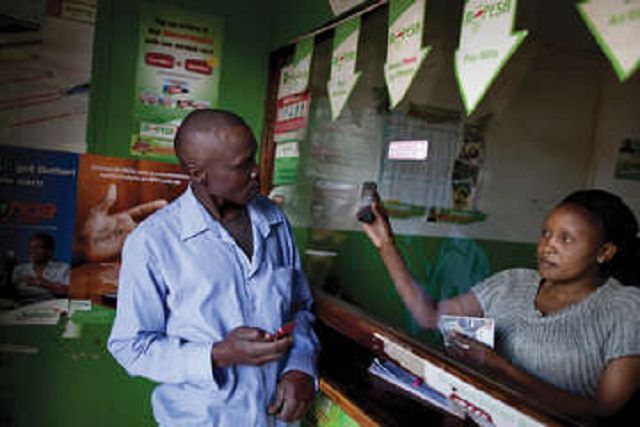
Agriconnect Communication Media and Africa Green Media
"...[T]o achieve its full potential, smallholder agriculture must be transformed from a subsistence activity to a profitable, sustainable business. ICTs play a vital role in this transformation." - Michael Hailu, Director, CTA
This article was written by journalist Fidelis Zvomuya, who attended the International Conference on ICT4ag, which was co-hosted by the Technical Centre for Agricultural and Rural Cooperation (CTA) and the Rwandan Ministry of Agriculture and Animal Resources (MINAGRI), November 4-8 2013, Kigali, Rwanda. It was meant to explore the possibilities that information and communication technology (ICT) can provide in agriculture as well as the development of new solutions that can improve the day-to-day operations of farmers in the African, Caribbean and Pacific (ACP) countries. The event drew close to 500 participants from the government, private sector, non-governmental organisations (NGOs), intergovernmental bodies, and development agencies from 66 countries. Participants included agricultural experts, farmers, young innovators, ICT companies, and government officials. Key issues discussed included the role of youth and the encouragement of entrepreneurship, the inclusion of farmers in decision-making, information and crowdsourcing, and connectivity.
Zvomuya notes that approximately 65% of the Africa's workforce is involved in agriculture; most of these workers are women. This sector makes up 62% of the continent's gross domestic product (GDP) and produces 80% of Africa's food. "Smallholder farming, which is the backbone of many African economies, is set to be transformed by a combination of investment and increasing access to ICTs, particularly mobile phones." As noted here, in 2000, there were 16.5 million mobile subscriptions in Africa; as of 2013, there are over 650 million.
Reflecting on the words of CTA Director Michael Hailu and other contributors to the conference, Zvomuya describes some of the discussions that took place there related to the use of ICT in the agricultural field in ACP countries. For instance, Hailu said there is no reason for Africa to import so much food; he believes that IT can play a key role in resolving this issue, at the same time creating employment as well as stemming the migration of people from rural areas into cities. Dr. Agnes Matilda Kalibata, Rwanda's Minister of Agriculture and Animal Resources, reminded the audience of the significance of agriculture in poverty reduction, saying that ICT plays a key role. Michael Ryan, the head of the European Union (EU) Delegation to Rwanda, said that investing in ICT for agriculture is not only an opportunity for policymakers to have a direct link with rural famers but also an opportunity for rural famers to have direct links to markets and commodity prices for sustainable agriculture.
Zvomuya details some of the specific elements of the conference, such as a Plug & Play session that involved approximately 35 ICT4ag innovators showcasing various ICT solutions, some of which were developed by start-ups that could help solve agricultural problems. "The hands-on format of this event allowed participants to try out many of these tools and discover how they can be applied to their own settings. The day attracted over 300 participants and was a warm-up for the main conference." Examples of some of the ICT solutions shared here include:
- mFisheries is a suite of mobile and web applications developed at the University of the West Indies. Using a smartphone, fisherfolk can access weather reports, navigational tools, and training tips on first aid and emergency boat repairs. Farmers can also use the app to find out fish prices in different markets, and they can post what species they have caught and the quantities they've got while they are still out at sea. Buyers using mFisheries can then get directly in touch with the fisherfolk and make a transaction. "Launched and tested in Trinidad, this suite of applications could prove just as useful for small-scale fisherfolk in the Pacific, Africa and elsewhere."
- Kenya's iCow includes services such as a cow calendar whereby farmers register their cows by gestation date; SMS (short messaging service, or text) messages provide them with the information they need about when to use artificial insemination (AI) and how to look after their cows. Another service provides farmers with a list of AI providers. According to Green Dreams creative director Su Kahumbu Stephanou, iCow has helped farmers to increase their daily milk production by 2 to 3 litres and their incomes by US$30 a month.
- Mobile Agribiz is a web and SMS mobile application linking some 400 farmers in the Democratic Republic of Congo with about 100 buyers in Kinshasa. Farmers can use the application to get information about market prices and needs; buyers can find out where they can get the produce they want. The SMS service also provides farmers with information on how to improve their agricultural skills.
- Developed in Canada, GEOLive is a participatory web-mapping application that allows communities to put themselves on a map and influence decision-making; reportedly, it has been helpful to local farmers' groups in Canada and elsewhere.
- To eliminate the traditional paper-based data collection the International Livestock Research Institute is now opting to collect and manage data on smartphones, using the Open Data Kit (ODK) tools developed by Google.
In addition to reporting on a hackathon focused on building apps geared toward solving agricultural problems that ran parallel to the conference, Zvomuya explains that the final day of the conference offered participants the chance to see innovative ICT solutions in action on a number of field trips. One such trip was to Huguka Radio, an agricultural and rural development radio station and Gicumbi, an initiative where university staff link with farmers to provide knowledge and farming practical solutions.
He concludes that, despite ICT being expected to drive agriculture, "a lot needs to happen. And this will include the movement from primary agriculture to value-added agriculture. The continents need to increase productivity, but also need to improve the efficiency which are closely linked. And ICT must produce applications can shift agriculture into a new world."
Email from Stéphane Gambier to The Communication Initiative on December 6 2013. Image credit: CTA
- Log in to post comments