










































Impact Data - Scrutinize
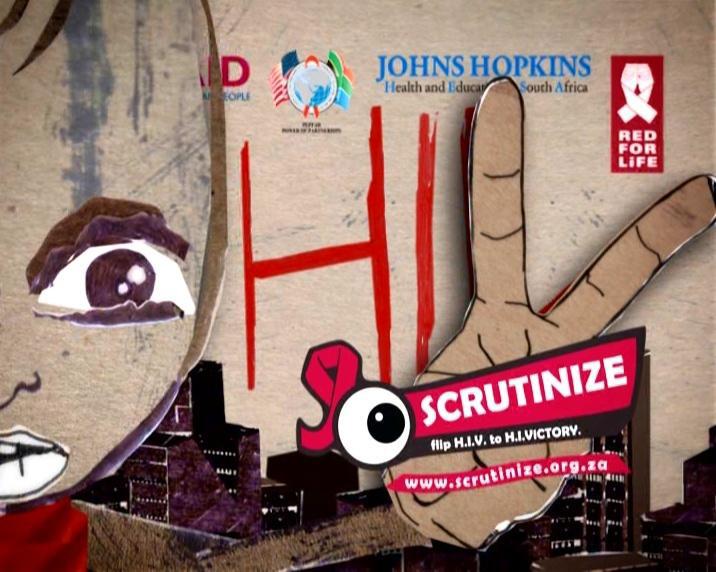
Scrutinize is a social and behaviour communication change (SBCC) campaign created in partnership with United States Agency for International Development (USAID), the Johns Hopkins Health Education in South Africa (JHHESA), and designer jeans label Levi's that aims to encourage and equip young people to take responsibility to reduce their risk of HIV infection. It uses animated township characters who illustrate daily life encounters that place young people at risk of HIV infection. The animerts, which are intended for 18-32 year-olds in South Africa, aim to equip viewers with a new HIV fact or insight to help them examine (or scrutinise) their own risky behaviours and beliefs. Another aspect of the campaign is interpersonal communication (IPC) using entertainment-education approaches at schools and universities.
These data are from the first year of Scrutinize (June 2008 to July 2009). The evaluation is based on data from the 2009 National Communication Survey, comprising 9,728 respondents across all 9 provinces, which aimed to measure the impact of communication programmes in South Africa.
A 9-item scale was developed to determine whether there was a dose response between those with higher levels of exposure and those with lower levels of exposure. Exposure was controlled against 11 socio-economic and demographic factors and other communication programmes. The evaluation found that young people with a higher degree of exposure to Scrutinize (able to recall all 9 items) had higher levels of knowledge of the behaviours that place them at risk of HIV infection and were more likely to take action to reduce their risk. With regard to knowledge levels of the risks of multiple sexual partners for HIV infection, only 41% of young men with low levels of exposure to Scrutinize knew that multiple partners were a risk factor for HIV infection, compared to 54% of young men who were able to recall all 9 items. Amongst young women there was a 10 percentage point difference.
The animert communicating the risk of HIV infection in the first 6 weeks after infection was found to be effective with regard to partner reduction - particularly with young males. Furthermore, young people with a higher degree of exposure to Scrutinize were more likely to use condoms than those not exposed to Scrutinize. This was particularly true for young men.
The evaluation found that there may be a boomerang effect on attitudes relating to multiple sexual partners (MSP) amongst young men who think they are not at risk, even though they have multiple partners. In this instance, showing entertaining animerts on television may have inadvertently legitimised and reinforced MSP attitudes among a small subset of young men who already hold those attitudes and those who think they are not at risk.
The evaluation found that: 53% of all young people with a high level of exposure to Scrutinize had discussed HIV testing with their friends, compared to 35% with no exposure; 42% of those with high levels of exposure had asked their partners to get tested, compared to 33% of those with no exposure; and 43% of those with high levels of disclosure had disclosed their HIV status to their partners, compared to 31% with no exposure.
The evaluation found that 79% of youth aged 16-24, 73% of young people aged 25-35, and 55% of adults aged 36 -55 recognised the Scrutinize TV campaign and logo.
The logistic regression analysis shows that when controlling for certain socio-economic factors and other communication programmes that there is still a significant impact of Scrutinize on condom usage across the entire population, but this also shows the benefit of multiple communication programmes.
JHHESA website, August 11 2011; and "Impact and Cost-Effectiveness of the Scrutinize Communication Campaign on Condom Use in South Africa" [PDF], by Richard Delate, 2011.
- Log in to post comments