
























Development action with informed and engaged societies

After nearly 28 years, The Communication Initiative (The CI) Global is entering a new chapter. 

Following a period of transition, the global website has been transferred to the University of the Witwatersrand (Wits) in South Africa, where it will be administered by the Social and Behaviour Change Communication Division. Wits' commitment to social change and justice makes it a trusted steward for The CI's legacy and future. 

On the transfer, co-founder Victoria Martin expressed her pleasure to see this work continue under Wits' leadership, knowing that co-founder Warren Feek (1953–2024) would have felt deep pride in The CI Global's Africa-led direction. 

As Wits, we honour the team and partners who sustained The CI for decades and look forward building from that strong base. This includes co-founders Warren Feek (1953-2024) and Victoria Martin as well as La Iniciativa de Comunicación (CILA), which continues independently at lainiciativadecomunicacion.com with links to The CI Global site. We are also eager to forge new partnerships and entertain new ideas as we consider how best to contribute to social and behaviour change in our rapidly evolving environment.

If you are joining the International Social and Behaviour Change Communication (SBCC) Summit in Panama, please join Wits and CILA on Monday, 22 June, to share your thoughts and suggestion for the relaunch of the Communication Initiative. We will be in Pacifica 5 from 12-1:25 for the Refuel, Reflect, and Renew Lunch Series: The Communication Initiative: celebrating a driving force for Communication for Social Change and the way forward. We will reflect on the legacy of Warren Feek and family in creating the Communication Initiative, consider the contributions of CI over the years and then turn our attention towards the future in this dynamic session. 

If you are unable to join us in Panama, we still want to hear from you. Please contribute your thoughts by following this link: https://redcap.link/CommunicationInitiative2026 or reaching out to ci_surveys@commint.com

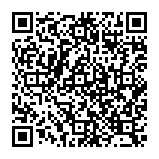
You can also follow the QR Code:

 https://redcap.link/CommunicationInitiative2026

Time to read
less than
1 minute
Read so far

It's Not What You Know, But Who You Knew

0 comments

Author

SummaryText
This article examines the notion that, as the HIV/AIDS epidemic spreads through communities in Africa and mortality mounts, behaviours that prevent transmission must also change. The authors focus on men in three countries - Uganda, Kenya, and Zambia - examining determinants of their behaviour change. They analyse the relative importance of knowing someone who has died of AIDS as compared with other factors such as age, education level, knowledge of HIV/AIDS, economic status, and marital status. Data from three DHS surveys in Uganda (1995), Zambia (1996), and Kenya (1998) are fitted to a model predicting behaviour change. Results from this cross-sectional, multinational study suggest that married and working men aged 20-40 are significantly more likely to have changed their behaviour in response to the epidemic than are others. Personal experience of AIDS is a significant predictor of behaviour change in Uganda and Zambia, and is marginally significant in Kenya. One implication of this study is that behaviour change is partly determined by the high level of mortality experienced by African communities. A second implication is that higher levels of disclosure, or lower levels of denial of AIDS as a cause of death, may help individuals change their behaviour.

This material is available in the journal AIDS Education & Prevention, Apr 2001 13(2): 160-74.
Number of Pages
14; from 160-174