










































The jewel of Afghanistan
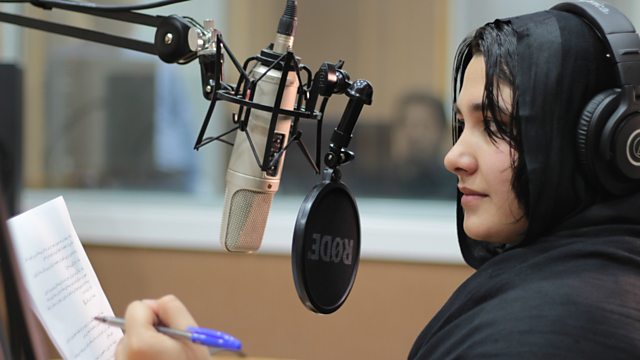
Author: BBC Media Action's Sam Waterton, November 3 2016 - "I want to be a symbol for people with disabilities that no matter the challenge, nothing is impossible”."
Sitting in richly furnished office with the flag of Afganistan in its corner, Sabri Andar is a shining symbol of success. At 24 years of age, Sabri, who uses a wheelchair after suffering from polio as a child, is an adviser for Afghanistan’s Ministry of Education, and leads the country’s National Youth Parliament.
“When I was a child, war forced my family to flee. I was vaccinated against polio but it was already too late,” she said “Gradually, polio took hold and I became paralysed.”
Sabri believes that the instability of conflict in Afghanistan has contributed to her own situation – and many more like her.
Health and happiness
Sabri is being interviewed for Ghamai (which means Jewel in Pashto), a weekly radio programme designed to help improve children’s health in Afghanistan. The show, a mixture of interviews, drama and discussion, advertises itself on the BBC World Service as being ‘a treasure for good health and happiness’ for families everywhere in Afghanistan.
The producers hope Sabri’s personal story will inspire other people with disabilities; it also allows the show’s presenters to talk about how polio is transmitted – and how people can prevent it through vaccinations.
Life-saving information
“Ghamai is helping bring life-saving information into people’s homes” says the show’s presenter, Shabana Mohammadzai. The programme covers anything on child health; from the prevention of polio, measles and TB to breastfeeding, nutrition and dental hygiene. “Ghamai has lots of health information, and our [health related] drama helps people laugh while they learn.”
Conflict, sparse health services and common myths – that vaccinations aren’t halal, or can cause infertility – have all contributed to Afghanistan remaining one of the few countries in the world where polio is still endemic.
A short visit to Kabul’s biggest children’s hospital, founded with the assistance of the Indian government in 1966, gives cause for hope. As mothers stream through the hospital gates with swaddled babies, a dedicated polio vaccination team calls them over to administer OPV (Oral Polio Vaccination). Unsuspecting, sleepy-eyed babies have their cheeks squeezed, gently parting their mouth to pop in the vaccine. For mouths used to milk, the taste must be horrible, but the benefits are huge.
Polio: "there is no cure"
“In Afghanistan, less than half of children aged 12 to 23 months are fully immunised, 13% of children aren’t immunised at all”, says Denise Shepherd-Johnson, who heads up communications for UNICEF Afghanistan. “One of the ways to make sure parents are aware that the vaccination is safe, effective and free…is via radio.” As Denise points out, the consequences of polio are irreparable. "Once a child has polio, there is no cure.”
One hundred and forty miles east of Unicef’s offices in Kabul, an all-women-run radio station in Afghanistan's Nangarhar province broadcasts from two tiny studios. Shalah Shaiq founded Radio Nargis in 2007, “to provide guidance to women on their day-to-day affairs”. In addition to broadcasting daily programmes on news, health and women’s rights, the station rebroadcasts Ghamai so it can reach local listeners.
It’s one of four FM local radio stations receiving editorial and technical training from BBC Media Action. Laila, a 20 year-old producer and presenter tells me that so far “training helped me produce four programmes to help [women] prevent child polio, malnutrition and diarrhoea.” She hopes to make many more.
As its name suggests, Ghamai (Jewel) is a precious information resource for people in Afghanistan. I’m hopeful that harnessing the power of local and national radio – along with government and NGO initiatives can improve child health, and help end polio for good.
Click here to access this BBC Media Action blog and related links on their work in Afghanistan.
Image credit: BBC Media Action
Contact:
BBC Media Action
BBC Media Centre, MC3A, 201 Wood Lane
London
W12 7TQ
United Kingdom (UK)
Phone: 44 (0) 20 8008 0001
Fax: 44 (0) 20 8008 5970
Media.action@bbc.co.uk
- Log in to post comments