










































Mock Tribunal to Advance Change
BAOBAB for Women’s Human Rights
In this notebook, the author explains a tactic used in Nigeria in 2001, a mock tribunal, to change public perceptions and beliefs regarding violations against women, and to change public policy and law. "BAOBAB for Women’s Human Rights, in collaboration with CIRDDOC (Civil Resource Development and Documentation Centre), highlighted violations of women’s rights in Nigeria that were viewed by the public as normal or even justifiable abuse. The organisation used prominent people – a Nigerian Supreme Court justice, a member of the Convention on the Elimination of All Forms of Discrimination (CEDAW) committee in Nigeria, lawyers, and representatives from the National Human Rights Commission – to create a high powered panel of 'judges' to draw television, radio, and print media attention and hear testimonies by women from many areas of Nigeria. The judges were selected based on their prominence and their concern for women’s rights. The tribunal’s recommendations [were] instrumental, at both local and national levels, in subsequent attempts to advocate for new laws and for reforms of existing laws related to violence against women."
According to the author, this mock tribunal was organised "so that the general public would recognise violence against women and help stop it; so that law enforcement agents would recognize such violence, their own role in perpetuating it, and their responsibility in preventing it; so that the government would agree to play a more significant role in reducing the violence and make resources available to help care for victims; and also so that the government would provide resources to compensate and counsel survivors, helping them integrate back into their lives and communities."
Steps taken to implement the tribunal included:
- Determining resources and soliciting funders and co-sponsors.
- Mobilising allies including potential testifiers, judges (chosen for their prominence and their concern for women's human rights), and invitees.
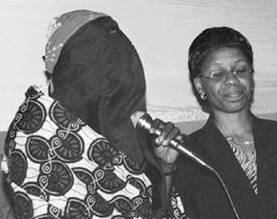
- Selecting testimony and guaranteeing safety, security, and anonymity of testifiers (some testimonies were filmed with testifiers' faces hidden; some were read by representatives; and those giving public testimony were offered support and counseling).
- Attracting and preparing the media with pre-event workshops.
- Holding the event - this was done in a public place with media in attendance; after the testimony was given, the judges met privately and then read recommendations to the audience.
Further advocacy has been done with the video-taped event to mark International Women's Day and the 16 Days of Activism Against Gender-based Violence campaign. Follow-up research was requested and provided for the Human Rights Violations Investigation Panel Report (the Oputa Panel) and the British Department for International Development (DFID). Several coalitions were formed following the event to work on legislation and on capacity building and leadership training for women's rights organisations.
New Tactics in Human Rights website accessed on June 5 2008.
Comments

Thank you for referencing this great resource! For those of you who may want a few "how-to" pointers on setting up a citizen-based tribunal, please check out the blog post below.
"Before you organize a mock tribunal: 14 things to think about"
http://www.newtactics.org/en/blog/philippe-duhamel/you-organize-mock-tr…
Philippe Duhamel
http://intertactica.org
- Log in to post comments