










































Nonprofit Communications Trends 2014
NonprofitMarketingGuide.com
"Curious about how other nonprofits will communicate in 2014? Want to see where the trends are?"
The communication trends detailed in this report come from an online survey completed in November 2013 by 2,135 non-profit organisations, 88% of which are in the United States (US), 6% in Canada, and 6% in 42 other nations. Twenty-three percent work in the areas of human services, housing, food, and/or jobs; 16% are in education; and 10% are in health, disease, and/or medical research.
Highlights from the report include:
- Top nonprofit communication goals for 2014: acquiring new donors (53%), engaging the community (49%), and general brand awareness (39%). Small nonprofits more likely to prioritise volunteer recruitment and retention than larger ones.
- On challenges: 57% of nonprofit communicators feel overworked; 5% are underworked; and 38% say just right.
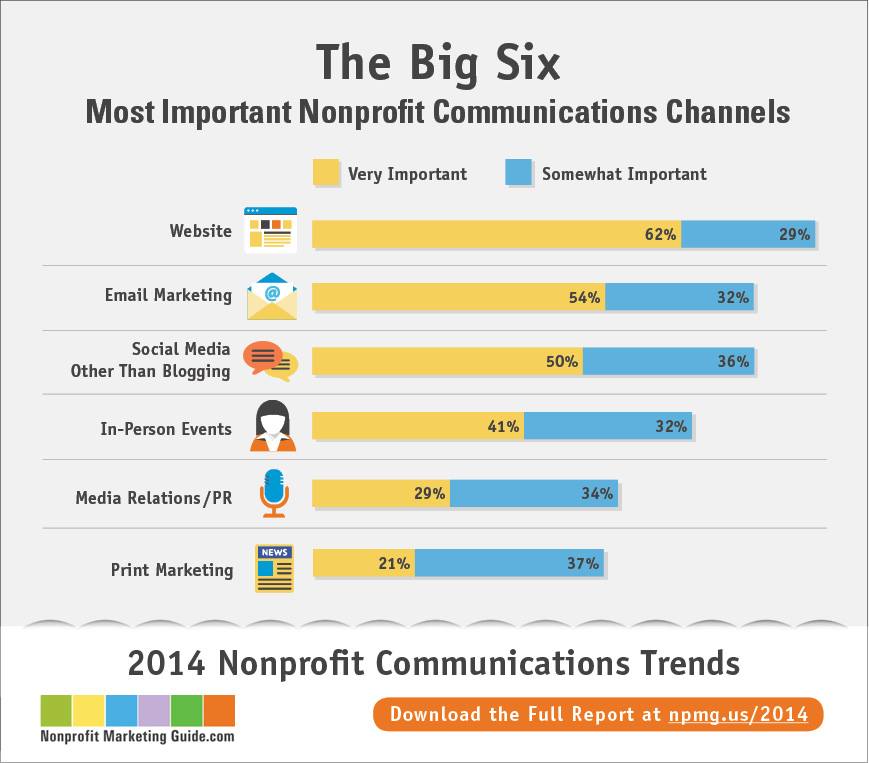
- Which communication tools are most and least important for nonprofits? Websites, email marketing, and social media other than blogging were rated highest, followed by in-person events, media relations/public relations (PR), and print marketing. In-person events appear to be more important to smaller nonprofits than larger ones. Media relations and print marketing are reportedly more important to larger nonprofits than smaller ones.
- With regard to the question of the most important social media for nonprofits: Facebook (95%), Twitter (64%), YouTube (38%), LinkedIn (26%).
- One-third of nonprofits plan to email fundraising or advocacy appeals at least monthly in 2014. Most nonprofits (59%) will send an e-newsletter at least once a month in 2014. Associations communicate with members via email more frequently than other types of nonprofits.
- Twice-a-year direct mail fundraising is most popular with nonprofits for 2014. 15% won't do it at all. Quarterly print newsletters are expected to be most popular with nonprofits in 2014. A third won't do one at all. Religious organisations are more likely to favour print communications than other types of nonprofits. When asked: "What one thing would you stop producing if you could?", from the list of content choices provided, print newsletter articles, press releases, and print fundraising appeals topped the list.
- When asked "What one type of content do you think is most effective for your organization, regardless of the amount of time you spend producing it?", presentations in person, email newsletter articles, and print fundraising appeals topped the list.
One suggestion going forward: "It's important to value both fundraising and community engagement for long-term success. Talk openly about how your nonprofit can work on both at the same time, with consistent messaging."
Email from Brett Davidson to The Communication Initiative on January 9 2014.
- Log in to post comments