










































Prevalence of Influenza Vaccine Hesitancy at a Tertiary Care Hospital in Riyadh, Saudi Arabia
King Saud Bin Abdulaziz University for Health Sciences (Alabbad, Alsaad, Al Shaalan, Alola, Albanyan); King Abdullah Specialist Children Hospital (Al Shaalan, Alola, Albanyan)
Influenza vaccine hesitancy is an international problem, with variable underlying reasons and social influences. Conducted in an attempt to identify context-appropriate strategies for increasing vaccination uptake, this cross-sectional study determined the prevalence of influenza vaccine hesitancy and the effect of vaccine awareness campaigns on vaccine acceptance among 3 groups (parents, adult patients, and healthcare workers [HCWs]) at King Abdulaziz Medical City (KAMC), a tertiary care hospital in Riyadh, Saudi Arabia.
The study was conducted during the winter season of 2015-2016 among 300 participants (100 in each of the 3 groups). Overall, 83% (n = 249) had been vaccinated in prior seasons or were planning to be vaccinated in the future, while 17% (n = 51) of participants completely refused influenza vaccination and were thus deemed vaccine-hesitant, while. Among the 51 participants, the most common reasons for refusal were: "It doesn't have any positive effect or benefit" (n = 11 [21.5%]), "I don't need it because I'm healthy" (n = 9 [17.6%]), and "I think it causes serious side effects" (n = 7 [13.7%]). There was no significant relationship between education level and influenza vaccination uptake.
Confidence among participants in the 3 groups towards the Saudi Ministry of Health and doctors was very high, with 97% of adults, 95% of parents, and 93% of HCWs expressing trust in the information provided to them by the Ministry of Health, and 97% of adults, 99% of parents, and 90% of HCWs trusting their physicians' information.
Regarding knowledge of the vaccine, 89% (n = 267) of participants had heard about the influenza vaccine. The most common sources of information were medical staff, awareness campaigns, and media; these accounted for 25%, 24%, and 20%, respectively. However, 137/300 (45.6%) did not know the correct duration of vaccine protection or the need for annual re-vaccination.
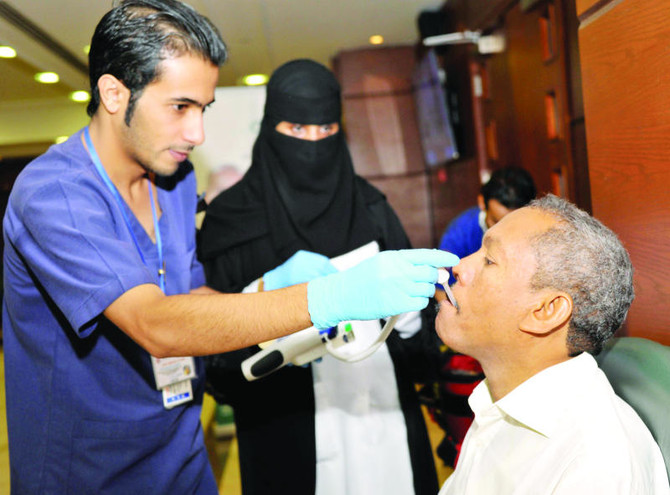
The researchers reflect on the findings, surmising that one of the potential reasons for the low overall rate of influenza vaccine hesitancy in this study is the robust influenza awareness campaigns at KAMC conducted yearly in clinical and nonclinical settings from September until March. Booths for influenza vaccination are present all over the hospital (for all HCWs and their families, visitors, childcare workers, etc.), and the vaccines are offered free of charge to everyone, along with educational materials like brochures, illustrating panels, and videos. The researchers cite other studies from outside Saudi Arabia that confirm the role of vaccine awareness efforts in improving acceptance.
They also cite a systemic review by Jarrett et al. conducted between January 2007 and October 2013 to identify, describe, and assess the potential effectiveness of strategies to respond to issues of vaccine hesitancy. That study concluded that identified strategies should be carefully tailored according to the intended population, their reasons for hesitancy, and the specific context. Information shared in the newer modes of communication, such as online blogs and social media, is one of the major factors influencing public opinion about vaccines and their results, including severe side effects. In the Saudi Arabia study, the internet was identified as a close fourth most common source of knowledge. However, despite the substantial impact and importance of the media, healthcare professionals have often been consistently identified as the main advocates for vaccination and the most important source of information about vaccines for the general public.
The confidence of the participants towards the Saudi Ministry of Health and medical doctors was high and should be taken into consideration going forward, the researchers suggest. Physician participation is important in awareness campaigns and in social media education. The outcomes support continuation of KAMC's current practice of educating patients about influenza vaccination via medical staff in clinics or by conducting awareness campaigns - both on social media and in the facilities and communities - that emphasise its benefits and tackle myths around it.
Journal of Infection and Public Health, July–August, 2018, Volume 11, Issue 4, Pages 491–499. DOI: https://doi.org/10.1016/j.jiph.2017.09.002. Image credit: Arab News
- Log in to post comments