










































Reflections on Media Education Futures
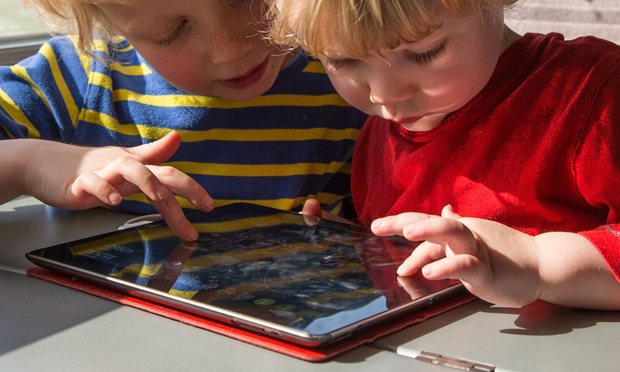
"With technology companies continuously launching new devices, media consumption is constantly changing and new relationships with media and practices raise new questions. At the same time, new generations adopt new roles as users of the media and start expressing their opinion and voice in networked public spaces. So, what should we think about media education and its futures?"
From the International Clearinghouse on Children, Youth and Media at Nordicom, this 2015 Yearbook explores the state of media education in the context of rapid changes in technologies, including developments in the content and marketing of media, from the perspective of children and youth. Media education is used here instead of, for example, media and information literacies, to emphasise the paedagogic practices and contexts for the promotion of literacy skills and digital competencies needed in information societies.
The publication, reflecting research in this field from different continents and including discussions from both academic and practical perspectives, has its origins in the international conference "Media Education Futures" 2014 in Finland. The event gathered international researchers in the field, as well as national and international organisations and actors in European and global fields of media education. In their discussions, the 140 participants from 26 countries around the world highlighted participation, well-being, and citizenship as current Nordic perspectives in media education, and discussed media and information literacies contributing to intercultural dialogue. Research results presented at the conference indicated that the civic skills needed in information societies include critical awareness, which is the basis for understanding media societies. Critical thinking is also the basis for creativity and should be included in the teaching of coding, which has been done in several countries in new school curricula at the basic level. Moreover, the need for broader cooperation among researchers with different cultural backgrounds, rather than traditional Europe-centred collaboration was echoed.
To that end, this publication reflects topics including critical awareness, technological citizenry, methodologies in studying young people in urban cities, and youth well-being in relations to media and information literacies. The publication includes contributions from different parts of the world and is divided into 2 sections:
- Academic articles collected from keynote speakers as well as participants in the conference panel and parallel sessions focused on conceptualising phenomena and research in the field of media education. For example:
- Divina Frau-Meigs calls for new conceptualisations of literacies and suggests conceptualisation as augmented media literacies in information societies.
- Johanna Sumiala, Leena Suurpää, Titus Hjelm and Minttu Tikka look for more dialogic and sensitive, creative ways of implementing an ethnographic study among young people in urban media cities.
- Ida Cortoni and Veronica Lo Presti suggest a dialogic framework of digital competencies.
- Minna Saariketo introduces a software studies approach to thinking about digital competencies in the 21st century.
- In a case-based reflection, Ilona Biernacka-Ligieza discusses the teaching of media competencies restricted to information technologies.
- Camille Tilleul, Pierre Fastrez, and Thierry De Smedt present an empirical evaluation of the competencies regarding media literacy and media education.
- Anne Lehmans and Vincent Liquète present a study at a high school on information practices and the construction of media and information culture among young people.
- Mathias Karmasin, Sandra Diehl, and Isabell Koinig reflect on a curriculum of academic media studies from the perspective of a convergence of media.
- Lana Ciboci, Igor Kanižaj and Danijel Labaš introduce an approach to the implementation of media education policies in countries accessing the European Union (EU) as a public opinion research project on media education.
- Matteo Stocchetti takes a stand reflecting on the futures of media education from a critical paedagogic perspective.
- This section also highlights global and comparative perspectives in the field of media education - for example, descriptions of the history of media education in China by Zhang Yanqiu and of projects on media education in the favelas of Rio by Leonardo Custódio. Comparative perspectives include reflections on youth well-being and media literacies by Finnish and Indian authors Sirkku Kotilainen and Manisha Pathak-Shelat. Marketa Zezulkova reflects on the teaching of media learning among primary school teachers and their pupils in a comparative setting in the Czech Republic, the United States, Malta, and Colombia.
- The chapters in the second section, Practical Papers and Case Studies, are more focused on empirical reports and practical paedagogy as well as policy-oriented questions of media education. For example:
- Keynote speaker Li Xiquang speaks for renewing journalism education in an information society from the Chinese perspective. His article is a story of a journalistic learning caravan, a method of teaching a slow journalism in the age of social media, which is the everyday media for young adults with its constant and instant messaging.
- Maria Apparecida Campos Mamede-Neves and Stella Maria Peixoto de Azevedo Pedrosa report on a study on the use of online social networking sites by young people from the perspective of inter-generational conflicts.
- Daniela Cinque and Claudia D'Antoni reflect on teen production on the internet, looking for the dynamics of sense they produce online.
- María José Díaz-Aguado, Laia Falcón, Patricia Núñez, and Liisa Hanninen argue for special reception competencies and creation competencies to ensure the contribution of education to media literacies among the young.
- Ana Solano, Tamara Bueno Doral, and Noelia García Castillo report on a research methodology that combines electronic art with the creation of corporal imaginaries during the early childhood years.
- Klaus Thestrup discusses a research project that investigates how children and paedagogues can communicate with, for example, kindergartens around the globe.
- Dag Asbjørnsen looks at developing media literacies in the EU regarding consumer protection and audience development.
- Developments in media education, with highlights of the implications on the economic crisis in Greece, are the focus of a paper by Kostas Voros.
- Agata Walczak-Niewiadomska describes the developments of media literacy and media education as part of library services in Poland.
- Patrick Verniers takes a look at the futures, starting from a transversal approach to a stand-alone disciplinary development, to 4 main scenarios tjat can be identified to help in thinking about the pathways to achieving effective media education for all citizens.
308
New Media Development Publications January - June 2016, sent from CAMECO to The Communication Initiative on August 19 2016. Image credit: Alamy
- Log in to post comments