










































Social Media and Elections
Global Partners & Associates
"The profusion of content on multiple platforms poses a significant challenge to regulators seeking to provide a level playing field for political parties and voters."
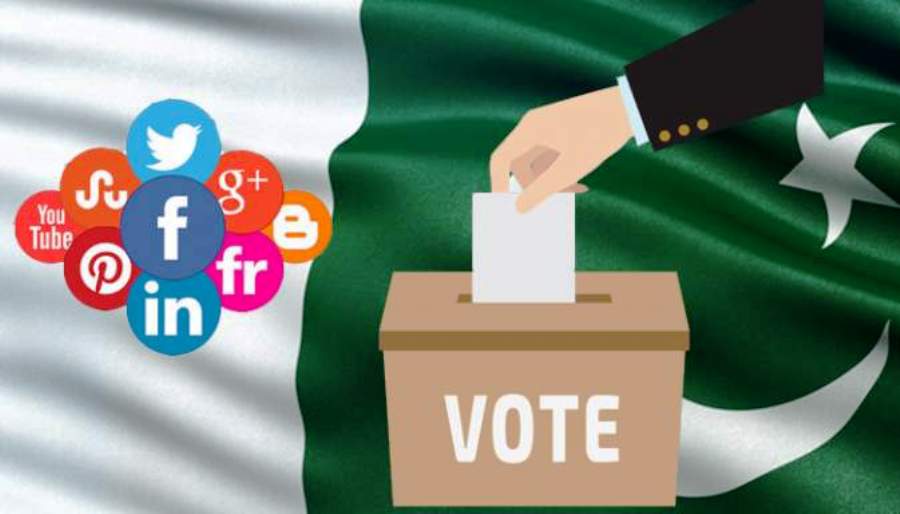
Electoral events are some of the defining moments of a democracy. In recent years, a number of electoral events around the world have given rise to concerns among election regulators and civil society groups about the role of social media. While there is nothing new about misinformation or disinformation, the novelty may lie, among other aspects, in the speed, the scale, and the tools available to electoral players willing to influence (legitimately or otherwise) the "marketplace of ideas", with resultant effects on voters' attitudes and behaviours. Published by the United Nations Educational, Scientific and Cultural Organization (UNESCO) as an invitation to debate, this paper analyses the potential impact of social media on the conduct and outcome of elections. Acknowledging the potential of these media to strengthen political participation and knowledge sharing, especially among those who might not otherwise have a voice, the paper also explores the more harmful effects, particularly those relevant in the context of Latin America.
Author Andrew Puddephatt, British expert in the fields of freedom of expression and the challenges of the online world, begins by looking at historic trends and approaches in media and the elections. Policy debate has been characterised by "unclear thinking about whether offline and online responsibilities are or should be different, and concerns about an over intrusive role for the state balanced by a concern for the health of democratic debate". There is also variation among countries with regard to regulating the media and political advertising during electoral events. However, in general, existing approaches to media regulation during elections, most of which were developed in the 1990s, focus on the behaviour of conventional offline media during elections. On these views, "it was recognised that broadcast media was assumed to transmit on spectrum regarded as a public good, leased to the broadcasters by regulators able to impose conditions - for example to promote fairness or be placed under particular obligations to ensure balanced coverage during election periods - providing a duty to inform; setting out rules for election coverage; and the protection for freedom of expression during elections..."
Puddephatt examines various treaties and standards designed to set out the potential scope for a regulator to act while being consistent with international human rights law. However, while recommendations such as those advanced by the Council of Europe (CoE) focus on ensuring that editorial independence is respected, "[a]s social media companies claim merely to be platforms and are usually protected from liability for the content they simply carry (rather than create themselves) then no 'editorial responsibility' applies....This CoE standard...shows the limits of the conventional standards in dealing with the modern digital content environment."
There are several distinct features of social media that can be disruptive of democratic politics, in Puddephatt's estimation. For example, algorithms based on our interaction with social media platforms can create "echo chambers", whereby we are shut off from alternative or even random news and opinions. Other challenges for democracy are linked to the business model of the internet (reliance on advertising), its anonymity (people are able to express themselves in ways they would not dare if their identity was known), and the lack of checks and balances normally found in professional journalism (allowing falsehoods to spread). During elections, specifically, software algorithms can shape what people find in their news feeds without people being aware how they are being targeted. There are also strategies such Google and Twitter "bombs".
Puddephatt next considers emerging regulatory trends, noting that there is no current consensus about the types of regulation to apply to social media during elections. In light of his review of recent debate and proposals, he recommends adopting a hybrid system of co-regulation, where the regulator sets the outcomes but does not seek to impose detailed prescriptive requirements on companies. Puddephatt suggests that the regulator develops a high-level code of practice for social media companies, to be drawn up in consultation with the companies themselves, the political parties, civil society, and the wider public. This will require each regulator to establish a partnership with the principal social media platforms prior to the election period itself; this partnership should be built around the shared goal of ensuring a free, fair, and open election.
Puddephatt suggests that the resulting code of practice could include these elements:
- "There should be equal rights and opportunities for citizens to express their views and exercise their vote;
- There should be the ability for every citizen to question candidates and understand what their views are;
- Citizens should be free to exercise their rights without fear of violence, intimidation or coercion;
- There should be open and transparent debates and exchange of information."
He notes that the code could be built around a series of commitments - that social media companies:
- Report on the process to remove illegal content and the procedural safeguards necessary to ensure that decisions are made in a rights-respecting manner. (This could be backed by powers to fine or to penalise companies);
- Demonstrate how they will manage political advertising on their sites - for example by ensuring digital advertising has an imprint to make it clear who is behind the campaign;
- Prohibit anonymous advertising during election periods;
- Recognise the potential harm caused by the speed and scope of forwarded communications during elections and take appropriate steps to limit this (e.g., WhatsApp introduced a restriction to limit the number of users to whom messages can be forwarded);
- Do not accept paid advertising from overseas sources during the election campaign;
- Establish an accelerated complaints procedure to allow citizens to challenge online activities during the election campaign itself;
- Report weekly during an election campaign on measures taken to reduce the spread of misinformation and disinformation and discovered instances during the campaign;
- Report on measures taken to prevent the misrepresentation of identities and discovered instances during the campaign;
- Not to accept remuneration from, or otherwise promote accounts and websites that consistently misrepresent information about themselves; and
- Be transparent about the use of their platforms during elections if concerns are raised.
In general: "The Code of Practice is designed to be balanced, not interfering with the content of communications but seeking to regulate identities, in the name of transparency, and techniques for distributing content in the interest of fairness. It does not seek to tell companies how to engineer the solutions, but it does require them to be transparent about what they are doing and how they are doing it. It also requires them, in their own processes to respect human rights principles and values."
Puddephatt concludes that these recommendations should be seen as a first step in exploring the potential role of regulators, noting the paucity of research into the impact of social media on elections and calling for further investigation and dialogue.
Click here in order to view or download the 24-page document in English in PDF format.
Click here in order to view or download the 27-page document in Spanish in PDF format.
Email from Guilherme Canela De Souza Godoi to The Communication Initiative on September 14 2019. Image credit: IRNA English
- Log in to post comments