










































The TAP Toolbox: Exercises, Tools and Templates to Support Your Tailoring Antimicrobial Resistance Programmes Plan
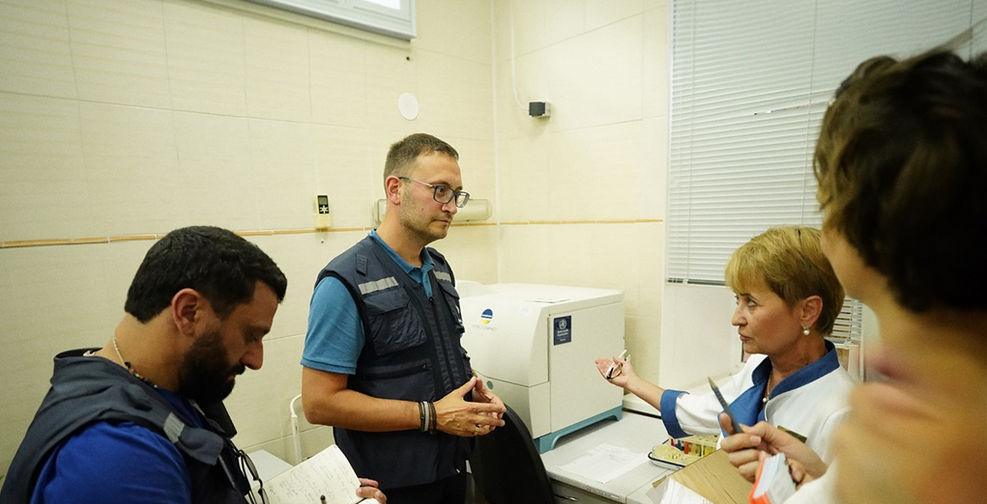
"Who do you want to bring into the TAP process, and who would you like to consult and engage with at key instances?"
Antimicrobial resistance (AMR) is a complex problem requiring unique, context-specific solutions. Developed by the World Health Organization (WHO) Regional Office for Europe in line with their Tailoring Immunization Programmes (TIP) approach, the Tailoring Antimicrobial Resistance Programmes (TAP) process is designed to help WHO Member States undertake projects to address the spread of AMR in their countries. This TAP toolbox contains a series of exercises and is aligned with the stages outlined in the TAP quick guide (at Related Summaries, below). The toolbox is designed to be used by a TAP working group as they work through the stages outlined in the TAP quick guide and elaborated on in the TAP manual. It should be used in parallel with the TAP quick guide to address drivers of and barriers to AMR and can be read alongside the full TAP manual.
The toolbox provides a set of hands-on tools and templates for each step of the TAP approach. Its 5 sections are in line with the 5 stages of the TAP quick guide:
- Engage: This stage is about planning. What capacity is there to carry out the process? Do you have the right resources to start? Sample tool (1.4): Suggested governance structure and approach to engaging key stakeholders.
- Analyse: Do you understand your context? What is the question or behaviour you wish or need to address? This situation analysis phase guides you through reviewing relevant data and speaking to stakeholders before collating findings into a set of questions and behaviours to be addressed. Sample tool (2.4): Methods to help you conduct a key stakeholder workshop.
- Prioritise: What is the priority behaviour to address? Which drivers and barriers do you need to target? Sample exercise: Designing a research plan.
- Design: Build your strategy and interventions. Define the behaviour you wish to address, the related barriers and drivers, and the possible interventions that might be applied. This is where the Behaviour Change Wheel (BCW) framework and Capability, Opportunity and Motivation for Behaviour Change (COM-B) tool help you to understand AMR-related behaviours and consider options available to you to address them. You may wish to incorporate this step into your research plan. Sample exercise: Selecting barriers/drivers to target in your behaviour change intervention.
- Do it: Test out the intervention and monitor its impact. Consider adjusting as needed. If it works, scale it up! Sample exercise: Considering process and impact targets/indicators.
While this toolbox and the companion quick guide are written from the human health perspective, the methodology presented can also be applied in the animal health and agriculture sectors.
Publishers
WHO Europe website, November 16 2023. Image credit: WHO
- Log in to post comments