










































Three Reasons Why Jacinda Ardern's Coronavirus Response Has Been a Masterclass in Crisis Leadership
Massey University
In response to the COVID-19 outbreak, New Zealand has been described as having swiftly implemented a decisive lockdown, with a clear elimination goal. This article assesses New Zealand's public health response to the outbreak, arguing that Prime Minister Jacinda Ardern's style of leadership communication has been effective, and explaining what lessons emerge.
Author Suze Wilson cites her own and other academic research to make the argument. For instance, in studying effective leadership communication, Jacqueline and Milton Mayfield of Texas A&M International University have highlighted 3 key elements leaders must address to motivate citizens to adhere to their message, even when doing so "demands sudden, unsettling, unprecedented changes to their daily lives". These elements - "direction-giving", "meaning-making", and "empathy" - are embodied in Ardern's direction to New Zealanders to "stay home to save lives", while freely acknowledging the challenges this entails.
These qualities are evidenced in a specific example: Ardern's March 23 2020 press conference announcement of New Zealand's lockdown, where she delivered "a carefully crafted speech" that was followed by "extensive time for media questions". In contrast, Wilson suggests, "British Prime Minister Boris Johnson pre-recorded his March 24 lockdown announcement, offering no chance for questions from the media, while framing the situation as an 'instruction' from government, coupled with a strong emphasis on enforcement measures. Where Ardern blended direction, care and meaning-making, Johnson largely sought 'compliance'."
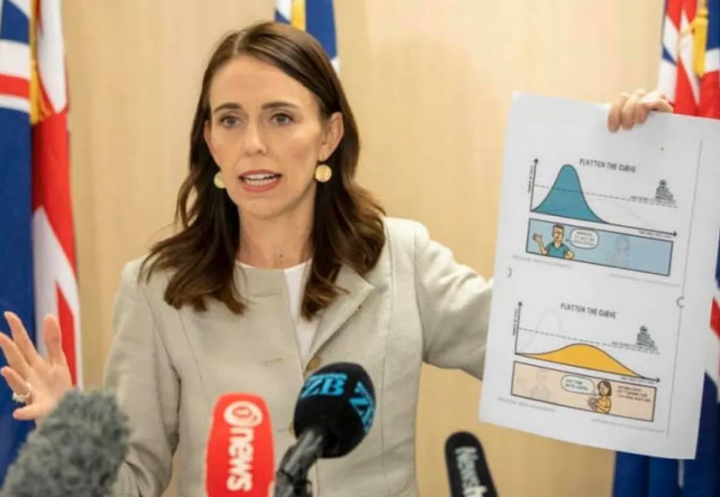
In harmony with some of the principles Harvard University scholar Ronald Heifetz has laid out, Ardern has used daily televised briefings and regular Facebook Live sessions "to clearly frame the key questions and issues requiring attention". In addition, "she has regulated distress by developing a transparent framework for decision-making." The government's 4-level alert level framework is designed to allow people to make sense of what is happening and why. That framework was released and explained 2 days before a full lockdown was announced, which gave people time to understand the messages and instructions and to prepare to comply.
For Warwick University scholar Keith Grint, leadership involves, as Wilson puts it, "persuading the collective to take responsibility for collective problems. Much of the prime minister's public commentary has been dedicated to exactly that..." Grint also argues that when dealing with problems that are complex, contentious, and difficult to resolve (so-called "wicked problems"), leaders must ask questions that disrupt established ways of thinking and acting. According to Wilson, Ardern has done just this, as evidenced by the suite of initiatives the government has taken to respond to the pandemic. (They are described here.)
Based on these arguments - and while noting that no response can be perfect - Wilson concludes that Ardern has given "most Western politicians a masterclass in crisis leadership."
The Conversation. Image credit: Jacinda Ardern/Facebook
- Log in to post comments