










































Multidisciplinary Experience Design and Gamified Learning to Spark Community Conversations on HIV Science in India
Summary:
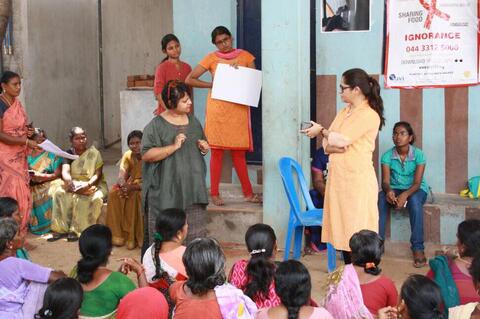
The Good Participatory Practice guidelines (UNAIDS and AVAC, 2011) recognize barriers to understanding HIV science as one of the major roadblocks to equitable and mutually beneficial collaboration between communities and HIV research teams. To address this, we experimented with experiential learning and gamification techniques to help democratize and humanize HIV science for communities through simulated experiences and community conversations. We identified common information needs of communities and the primary reasons for mistrust in HIV research. These centered around a lack of understanding of current gaps in HIV science, and how collaborative research could bridge them to improve human understanding of critical aspects such as HIV viral diversity, latency, drug resistance, and broadly neutralizing antibodies. To explain these complex concepts through relevant and culturally appropriate experiences, we designed simulation games to help deconstruct the fundamental biological mechanisms of HIV using familiar metaphors and cultural references. We piloted these games through 12 community workshops across Maharashtra, Kerala and Delhi, and learned that: 1) community conversations were most productive when conducted in groups of 15-20; 2) the optimal duration for such simulation games was 15-20 minutes; and 3) communities found it easier and considerably more enjoyable to learn about the biology of HIV and the scientific implications of research through games and simulated experiences. The potential for innovative pedagogies and multidisciplinary co-creation with communities looks promising and can play an important role in strengthening dialog between researchers and communities, and catalyzing better informed and more equitable participation in HIV research.
Background/Objectives:
The Good Participatory Practice (GPP) guidelines for Emerging Pathogens research (WHO, 2016) recognize the lack of scientific literacy among community stakeholders as one of the fundamental drivers of power inequities between research teams and communities. It can hinder the conduct of equitable, collaborative and mutually beneficial research as mandated by the GPP guidelines (UNAIDS and AVAC, 2011) and result in top-down, prescriptive and jargon-laden communications. To address this gap, we experimented with experiential learning and gamification techniques to co-create simulated experiences for communities to help democratize, contextualize and humanize HIV science and spark community conversations around it.
Description of Intervention and/or Methods/Design:
Through a series of exploratory design and experience sharing workshops that brought together laboratory scientists, clinical researchers, behavioral psychologists and community representatives, we identified common information needs of communities and reasons for mistrust in HIV research. They included an overarching need to understand current gaps in HIV science, and how collaborating in research could improve knowledge of understudied aspects of HIV in India such as viral diversity, latency, drug resistance and broadly neutralizing antibodies. To explain these concepts through relatable, relevant and culturally appropriate experiences, we engaged human-centered design and gamification experts to develop simulation games rooted in the local context that could help deconstruct the fundamental biological mechanisms of HIV and the human immune response. These games were developed through iterative prototyping before being piloted with diverse communities in Maharashtra, Kerala and Delhi, and presented to the Community Advisory Boards (CAB) of two leading research institutions in India.
Results/Lessons Learned:
Based on feedback received from 12 community workshops conducted using these gamified learning experiences, we learned that: 1) community conversations were most participatory when the group size was between 15-20 persons; 2) the optimal duration for a single game or activity was 15-20 minutes before people started feeling overwhelmed or began to lose interest; and 3) for many communities :in spite of having worked closely with several HIV research and programmatic interventions over the years :this was the first time they were learning about the biology of HIV and the goals of HIV research in any significant detail. In addition to finding themselves more informed of and invested in HIV research, workshop participants found it empowering to play the role of scientists in the games, and experiential elements such as wearing lab coats and using forceps and droppers contributed significantly to making the experience more authentic.
Discussion/Implications for the Field:
While the demand for and challenges in communicating HIV science to communities have been widely acknowledged (Newman et al., 2015), along with the effectiveness of community conversations in negotiating literacy and power gaps (Campbell et al., 2013), the potential for multidisciplinary co-creation with communities (Cizek et al., 2019) remains a nascent and under-explored area. Strategies such as experiential learning and gamification can play an important role in strengthening dialog and understanding between researchers and communities on the core objectives of HIV research, and facilitate better informed and more equitable collaboration in the field.
Abstract submitted by:
Saif Ul Hadi - International AIDS Vaccine Initiative (IAVI)
Devi Leena Bose - IAVI
Kashma Goyal - IAVI Consultant
Monib Ahmad - IAVI
Approved abstract for the postponed 2020 SBCC Summit in Marrakech, Morocco. Provided by the International Steering Committee for the Summit. Image credit: IAVI.