










































WACC Communication Partners in El Salvador Reap the Benefits of Advocacy Campaign
World Association for Christian Communication
This article from the World Association for Christian Communication (WACC) describes the work in El Salvador of its programme known as Communication for Peace. The programme has the following objectives:
- Strengthen media and other communication practices that advance non-violent transformation of local and national conflicts.
- Promote media activities aimed at building a culture of peace.
- Amplify the voices of women and men working to make peace possible.
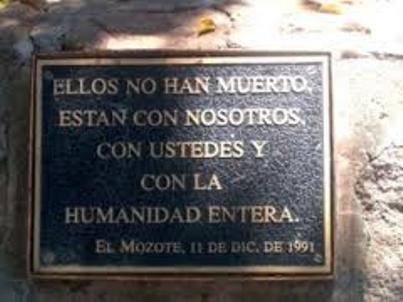
According to the author, WACC communication partners in El Salvador felt that they succeeded in meeting these goals when their advocacy campaigns resulted in a public, State apology by President Mauricio Funes for what he called "the worst massacre of civilians in contemporary Latin American history." He was referring to the 1981 massacre of over 1,000 civilians who were killed by soldiers in the town of El Mozote.
WACC supported three projects in El Salvador to help gain public acceptance of the need to come to terms with the country’s violent past. Two main strategies were supported:
- communication of the historical memory of El Salvador through participatory documentaries about grave human rights violations; and
- community organisation - in this case, the community of families of victims of the armed conflict.
Some of the history recorded and the networks established included:
- The University of Central America José Simeón Cañas (AUCA) produced a documentary called "Colima" that recounted a massacre by the paramilitary in 1980. One of the purposes of the documentary was to break the silence surrounding the atrocity by screening the documentary in cinemas throughout El Salvador. As a result of this work, the judicial process of exhumation of the victims began.
- The Committee of Family Members of Victims of Human Rights Violations, Marianella Garcia Villas, CODEFAM, organised a communications network for families of victims of the armed conflict. CODEFAM coordinated discussions with families and local action groups that resulted in a web page where stories and testimonies could be posted and in training programmes for young people to take part in the project. The objective of this organisation was to share information about the legal rights of these families and the role of communication in society as it pertained to helping them restore public memory of suppressed events. As a result of this project, over 240 individuals communicated their stories to raise awareness of their situation. Click here to access the web page.
- The AUCA then produced seven more documentaries about massacres that took place in the 1980s-90s. Each video includes interviews with survivors of the massacres or victims' family members, again resulting in a preserved history of voices not typically heard.
In 2010, WACC published an issue of its international journal Media Development dedicated to the theme of "The Right to Memory" asking how such a right might be used to transcend traumatic events in ways that overcome hatred, fear, guilt, and revenge and contribute to building a more peaceful and sustainable future.
We are sorry, but this item is no longer available online.
Email from the World Association for Christian Communication to The Communication Initiative on January 19 2012. Image courtesy of the WACC.
- Log in to post comments