











































Women, We Write the [Hi]story Project
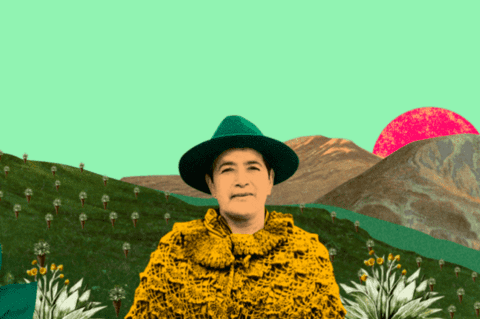
"The media has been a missing actor in the policies of inclusion and representation of women in society." - Vice Minister of Multilateral Affairs of the Colombian Foreign Ministry, Laura Gil
Women, We Write the [Hi]story project was a participatory journalism project that sought to highlight the role of women in the peace-building process in Colombia and to change the way women are represented in Colombian media. It did this through a co-production exercise with journalists that gave women social leaders the opportunity to tell their own stories of how they have consolidated peace and rebuilt the social fabric and memory of their communities.
Initiated in 2021, the project was led by International Media Support (IMS) and El Espectador, a Colombian media outlet. The project formed part of El Espectador's Colombia+20 journalism project, which follows up on the implementation of the peace agreement between the government and the Revolutionary Armed Forces of Colombia (FARC) guerrillas, while also focusing on telling post-conflict stories and changing the narrative imposed during decades of armed conflict in Colombia.
Women, We Write the [Hi]story project was a participatory journalism project that sought to highlight the role of women in the peace-building process in Colombia and to change the way women are represented in Colombian media. It did this through a co-production exercise with journalists that gave women social leaders the opportunity to tell their own stories of how they have consolidated peace and rebuilt the social fabric and memory of their communities.
Initiated in 2021, the project was led by International Media Support (IMS) and El Espectador, a Colombian media outlet. The project formed part of El Espectador's Colombia+20 journalism project, which follows up on the implementation of the peace agreement between the government and the Revolutionary Armed Forces of Colombia (FARC) guerrillas, while also focusing on telling post-conflict stories and changing the narrative imposed during decades of armed conflict in Colombia.
Communication Strategies
Women, We Write the [Hi]story involved journalists from El Espectador's Colombia+20 journalism project who worked with women leaders to produce stories using a methodology designed by IMS and El Espectador. Together with journalists, women leaders participated in workshops to build the stories, determine the approaches and the characters, and then jointly produce texts, audiovisual products, and podcasts that were published online by El Espectador. To date, 15 women have participated in the project's three phases. Women social leaders were chosen from Norte de Santander, Cundinamarca, Bogotá, Sucre, Córdoba, Antioquia, Santander, Cartagena, Cauca, Nariño, Arauca, Bolívar, César, and Tolima.
As explained by IMS, the project involved changing the routines of the journalistic teams that were accustomed to going to the field, conducting interviews, and returning to Bogota to produce the content. Instead, the subjects of the stories made the decision on what to tell, how to tell it, where to go, whom to interview, what to publish, and what not to publish. The focus was, above all, on highlighting stories that were of interest to them or their communities and/or that were about their struggles or needs in order to meet their need for communication and representation. Women social leaders participated in all the pre-production and production phases of the journalistic pieces, making the decisions, with journalists only guiding the process.
The project faced several challenges. The first was the fact that the women leaders found writing a challenge. Many of them, according to journalists, were afraid to write, and for this reason, it was key to have the reporters and editors travel with them. The other challenge was including male journalists. In the first part of the process, only women journalists oversaw the project, but for the second phase, the editors decided that it was necessary to include men. However, they were often afraid of asking questions that would revictimise women or that were not understanding the whole picture of a story. In the end, the men and women journalists in the team wrote stories with the women social leaders.
Stories that have been produced as part of this initiative can be read here. They include, for example, a story about the struggle for access to water, a memory route to heal the wounds caused by years of paramilitary violence, a story of some of the women of the Local Women's Council in Sumapaz and their role in peace-building and reconciliation, and a story about the women of Puerto Berrío and their struggle to find and identify the people who disappeared during the years of conflict in Colombia.
As explained by IMS, the project involved changing the routines of the journalistic teams that were accustomed to going to the field, conducting interviews, and returning to Bogota to produce the content. Instead, the subjects of the stories made the decision on what to tell, how to tell it, where to go, whom to interview, what to publish, and what not to publish. The focus was, above all, on highlighting stories that were of interest to them or their communities and/or that were about their struggles or needs in order to meet their need for communication and representation. Women social leaders participated in all the pre-production and production phases of the journalistic pieces, making the decisions, with journalists only guiding the process.
The project faced several challenges. The first was the fact that the women leaders found writing a challenge. Many of them, according to journalists, were afraid to write, and for this reason, it was key to have the reporters and editors travel with them. The other challenge was including male journalists. In the first part of the process, only women journalists oversaw the project, but for the second phase, the editors decided that it was necessary to include men. However, they were often afraid of asking questions that would revictimise women or that were not understanding the whole picture of a story. In the end, the men and women journalists in the team wrote stories with the women social leaders.
Stories that have been produced as part of this initiative can be read here. They include, for example, a story about the struggle for access to water, a memory route to heal the wounds caused by years of paramilitary violence, a story of some of the women of the Local Women's Council in Sumapaz and their role in peace-building and reconciliation, and a story about the women of Puerto Berrío and their struggle to find and identify the people who disappeared during the years of conflict in Colombia.
Development Issues
Gender, Media
Key Points
In 2000, the United Nations Security Council issued resolution 1325, which recognises the importance of women's participation in the construction, negotiation, and consolidation of peace in the world. Women, We Write the [Hi]story seeks to facilitate the implementation of Colombia's commitment to Resolution 1325. The resolution stresses "the importance of their equal participation and full involvement in all efforts for the maintenance and promotion of peace and security, and the need to increase their participation in decision-making processes for the prevention and resolution of conflicts."
The project also sought to address the dearth of women's voices in the media. According to the IMS, this issue is due not just to a lack of stories about women but also to the kinds of stories that are told about them. Their representation in the media is often focused on superficial or light topics, and, although there has been a notable increase in stories that highlight the systematic and differentiated violence suffered by women, these stories tend to be generalist and revictimising. In particular, there is an insufficient number of other types of stories showing women's resilience processes and their key roles in industries generally associated with men, which includes their role in building peace in the world. This representation is especially important in a country like Colombia, where women have been centrally involved as peace-builders.
The project also sought to address the dearth of women's voices in the media. According to the IMS, this issue is due not just to a lack of stories about women but also to the kinds of stories that are told about them. Their representation in the media is often focused on superficial or light topics, and, although there has been a notable increase in stories that highlight the systematic and differentiated violence suffered by women, these stories tend to be generalist and revictimising. In particular, there is an insufficient number of other types of stories showing women's resilience processes and their key roles in industries generally associated with men, which includes their role in building peace in the world. This representation is especially important in a country like Colombia, where women have been centrally involved as peace-builders.
Partners
IMS and El Espectador, with the Colombian Women's Initiative for Peace Alliance Initiative and the Norwegian Agency for Development Cooperation
Sources
IMS website and El Espectador website, both accessed on May 24 2023. Image credit: Graphic by El Espectador
- Log in to post comments