











































What Every Bride Needs to Know
IRIN/PlusNews
Casting a particular lens on Tanzania, this article looks at the role that bridal showers can play in educating women about HIV/AIDS and in empowering them to negotiate safe sex within marriage. Since studies show that married couples are at higher risk of HIV infection than unmarried men and women, women who are entering into marriage need to be able to protect themselves.
According to the article, studies have shown that marriage is no protection against HIV infection for women and girls: recent trends in neighbouring countries like Uganda suggest that married couples are actually at higher risk of HIV infection than unmarried men and women. An estimated 6.2 percent of 40 million Tanzanians are living with HIV; more than half of them are women, according to the Tanzania Commission for AIDS. HIV prevalence among married women aged 15 to 49 is 8.1 percent.
The article talks about the fact that women rarely control the timing and frequency of sexual intercourse in marriage, and many experience sexual violence and coercion. The inability to negotiate safer sex, especially in a society where concurrent partnerships are common, places married women at greater risk of contracting HIV.
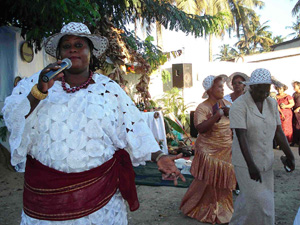
In Tanzania's largely conservative society, matters of sex and relationships are difficult to discuss at home. However, at bridal showers - or "kitchen parties" - there are no attempts to censor the conversation for sexual explicitness. Tanzanian bridal showers are used as a forum to provide tips to the bride on how to manage domestic arguments and ensure a happy sex life. No subject is considered taboo.
However, gender activists say that the parties perpetuate unequal gender roles by teaching women to be submissive to men in all respects, including sexually, putting them at greater risk of contracting HIV from their husbands. The article states that kitchen parties are teaching women how to think of their husband's needs above their own. They are geared toward making the bride subservient, docile, and quiet, in order to perpetuate the social norm that women have all the responsibility to make the marriage work.
As the article highlights, things are, however, changing. In some cases, the master of ceremonies (MC), who is usually hired by the family to discuss delicate matters such as sex at the kitchen party, is taking on the task of talking about AIDS.
The international social marketing company, Tanzania Marketing and Communication (T-MARC), has been using kitchen parties to promote the "Lady Pepeta" female condom, one of its products. They have also used the opportunity to broaden the conversation to include safe sex and health.
Some non-governmental organisations have started distributing traditional wraps, called khangas, at kitchen parties, printed with HIV and reproductive health messages to encourage discussion on these topics.
IRIN News website on November 18 2008. Image credit: Sarah McGregor/IRIN
- Log in to post comments