










































Religion - a Double-Edged Sword in HIV Fight
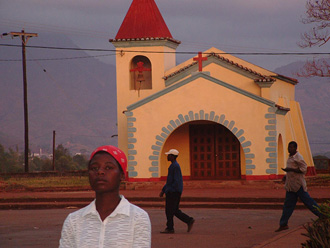
This article discusses the positive and negative role of religion in HIV and AIDS prevention and treatment. As stated here: "The contribution of faith-based organisations to the treatment and care of people living with HIV and AIDS is well known, but it is less clear whether religion is an aid or a barrier when it comes to HIV prevention efforts. According to [the Joint United Nations Programme on HIV/AIDS] UNAIDS, 70% of the world's population identify themselves as members of a faith community, putting religion and religious leaders in a privileged position to influence people's behaviour and attitudes."
On the positive side of the contribution of religious organisations, a 2007 World Health Organization (WHO) report found that faith-based organisations operate between 30 and 70 % of all health-care infrastructures across Africa. Describing the role of the church on another continent, Richard Eves of the Australian National University described how, in Papua New Guinea, the church has played a key role in caring for orphans, and encouraging people to test for HIV.
Addressing the negative effects of religions in the prevention and treatment of HIV and AIDS, the article describes religious leaders and groups, in some cases, as contributing to the stigmatisation of people living with HIV and to negative attitudes towards sexual minorities in a number of countries. In Papua, the church preaches that AIDS is the result of promiscuity, and some church leaders suggest that it is resulting in the apocalypse or end of time. Gabriela Rodriguez, of Mexico's National Population Council, commented that some religious organisations choose to ignore adolescent sexuality and the fact that in many parts of the world, youth as young as 15 years old are at a high risk of contracting HIV. The article states that "[t]he United States [US] government, for instance, has come under fire for attempting to influence HIV programmes, funded by the US President's Emergency Plan for AIDS Relief (PEPFAR), to focus on abstinence and faithfulness, at the expense of programmes promoting condom use." Religious influence is criticised for its role in the criminalisation of homosexuality in many countries, including India, where, as stated here, "groups such as men who have sex with men have been sidelined in the fight against HIV, because of their underground nature."
Eves recommends changing the minds and roles of religious leaders through dialogue rather than attacking them for their methods and ideologies. Rodriguez recommends a separation of Church and State because religious ideals are often hijacked by political leaders trying to gain influence, to the detriment of the fight against HIV. According to the article, religious leaders around the world are starting to use their influence to participate positively in the global HIV prevention effort. Positive contributions include the following:
*Hindu religious leaders from all over India pledged to include HIV information in their discourses, rituals, and festivals;
*religious scholars in Muslim countries such as Pakistan, Somalia, and Sudan are beginning to include HIV prevention messages in their sermons;
*Christian leaders are talking more openly about issues to do with sex and sexuality;
*renewed PEPFAR legislation has removed a requirement for prevention programmes it supports to dedicate at least one-third of funds to abstinence campaigns; and
*some Catholic nuns are handing out condoms and posters about HIV outside churches in Papua New Guinea.
For more information, contact:
Integrated Regional Information Networks (IRIN)
feedback@IRINnews.org
IRIN PlusNews website on August 5 2008.
- Log in to post comments