










































Real Films, Real Impact
"...[D]ocumentaries are increasingly being recognised as a key medium for communicating social justice issues and inspiring social change....But there is widespread lack of understanding about how the social impact of such media should be monitored and reported and a lack of templates and tools to assist them."
This collection of 5 case studies is designed to contribute to the field of work on media impact assessment. The United Kingdom (UK)-based documentary foundation BRITDOC, which organises the PUMA Impact Award, hopes that these case studies will serve as templates for other film projects by giving best practice examples of gathering and presenting quantitative and qualitative data. Each case study tracks the outcomes of the cinematic campaigns through a series of parallel sections. These reflect the categories used to judge PUMA Impact award winners, such as:
- What the critics said
- Who saw it: festivals, cinema, TV, DVD, screenings, online
- Campaign aims, and how the campaign worked
- Online trends, with a particular focus on key discussion spikes on Twitter
- Production and campaign budgets
- Campaign partners
- Campaign achievements, including field building, engaging influentials, adoption by educators, political wins, corporate buy-in, positive press response, formation of new organisations and networks, assistance/remedy for victims, and more
- Awards
The 5 in-depth case studies examine the impact of the 5 PUMA Impact Award finalists in 2013:
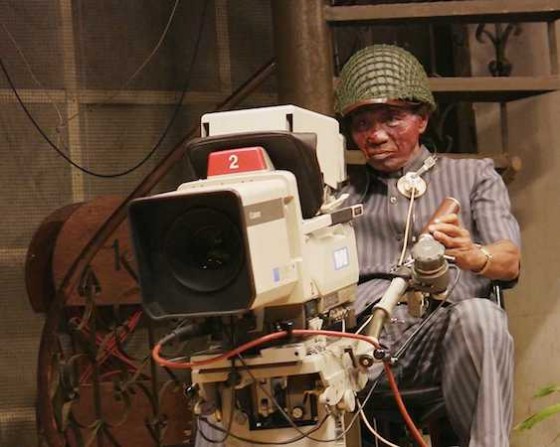
- Act of Killing - "In a country where killers are celebrated as heroes, the filmmakers challenge unrepentant death squad leader Anwar Congo and his friends to dramatise their role in the Indonesian genocide." As detailed in the impact report [PDF], the film was seen at 100 festivals in 57 countries and at 1,000 community screenings in 118 cities; it received 29 awards and prizes. It reportedly created an opening for media coverage and discussion of the massacres and informed a national human rights commission.
- Bully - "Over 13 million American kids are bullied each year, making it the most common form of violence experienced by young people. Bully brings human scale to this startling statistic, offering an intimate, unflinching look at how bullying has touched five young people and their families." Click here to read the impact report in PDF format.
- Give up Tomorrow - "A tropical storm beats down on an island in the Philippines, two sisters leave work and never make it home... Paco Larran~aga, a 19-year-old student, is sentenced to death for their rape and murder, despite overwhelming evidence of his innocence." Click here to read the impact report in PDF format.
- The Interrupters - "tells the moving and surprising stories of three Violence Interrupters who try to protect their Chicago [Illinois, United States] communities from the violence they once employed." Click here to read the impact report in PDF format.
- The Invisible War - an investigative documentary about "one of America's most shameful and best kept secrets: the epidemic of rape within the US military. The film paints a startling picture of the extent of the problem - 1 in 4 women will be sexually assaulted during military service." Click here to read the impact report in PDF format.
The case studies reveal that, collaborating with outreach, digital, organising, and public relations (PR) experts, the filmmakers tap into distribution, grassroots, and policy networks in order to amplify their subjects and mobilise stakeholders. Readers of the case studies also learn about strategies such as this: Act of Killing producers selectively geoblocked downloads of the film so that Indonesians could download and screen it in private without the threat of violence that accompanied public screenings.
Combining narrative, data, and observations from a committee of peers assembled to judge the films, the reports provide accounts of makers and advocates working together to make change. They offer a framework for other makers and funders seeking to evaluate media impact. Taken as a whole, the case studies also demonstrate the complexities of trying to boil impact down into a simple process or replicable formula. BRITDOC has assembled timelines in each case study, ranging in duration from two to nine years. These track the relationships between key moments in the film's life - production trips, screenings, festival premieres, and airings - with related campaign actions and relevant impact benchmarks.
Publishers
Email from Brett Davidson to The Communication Initiative on January 7 2014; and "BRITDOC Case Studies Offer Deep Dive Into Film Impact", Media Impact Funders, December 4 2013.
- Log in to post comments