










































Mozambique: External Evaluation of the Southern African Regional Social and Behaviour Change Communication Program
Tulane University School of Public Health and Tropical Medicine
This report discusses the Mozambique findings of an external evaluation of the Southern African Regional Social and Behaviour Change Communication Programme, an initiative implemented in 8 countries in Southern Africa from 2007 to 2011 to reduce HIV infection by increasing health awareness and facilitating social and behavioural change through both mass media and community-based activities. This evaluation assesses the impact of exposure to partners' interventions on key indicators of HIV knowledge, attitudes, and behaviours. It also provides insight into the potential value of a combined partnership approach.
The Mozambique component of the programme was implemented by N'weti-Comunicação para a Saúde!, the Southern African HIV and AIDS Dissemination Service (SAfAIDS), and the Community Media Trust (CMT), with funding from the United Kingdom Department for International Development (DfID). The evaluation was based on a researcher-administered survey questionnaire with 5,056 nationally representative males and females aged 15-49.
Although the evaluation was post-intervention only, the 2012 survey was compared with data from a prior survey to assess progress towards pre-specified DfID targets. Progress towards meeting these targets varies. "For example, there has been a decrease in the percentage of adults who had more than one sexual partner in the past year, from 24% at baseline to 18% in the current survey, well short of the target of 9%. Similarly, condom use at last sex among those with multiple partners increased by 10 percentage points for males (19% versus 29%) and by 23 percentage points for females (37% versus 14%), thereby achieving the target of 29% for males but falling just short of the target of 40% for females." While there has been a decrease in the percentage of people who do not think HIV/AIDS is a punishment for sinning from 60% at baseline to 56% in 2012, this is still well below the target of 90%.
The evaluation report discusses impact findings for each of the three partners. The following selection of findings includes:
- N'weti/ One Love Campaign
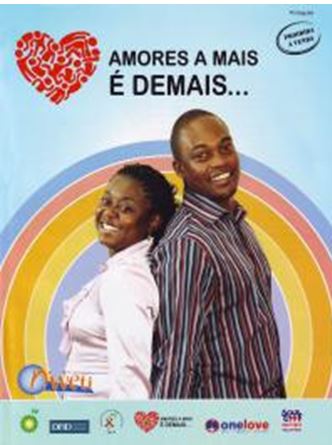
In Mozambique, the One Love mass media campaign was implemented under the local adaptation "Amores a mais, é demais. Yuuh! Não vale a pena." Data shows that the mass media component of the project had a relatively low reach, as compared to the same campaign in other countries ( see below links to other country reports); only 9.9% of respondents reported exposure to at least one OneLove radio programme, while 14% reported seeing a OneLove television programme, though this was higher in urban areas – 24.6% for radio and 37.6% for television. In contrast to most other countries, exposure to OneLove print media was higher than radio or television. Data demonstrates that exposure to the OneLove programme had little measurable effect on behaviours around multiple concurrent partnerships, a key focus of the programme, but "there was evidence that exposure to OneLove media affected community norms; individuals exposed to any OneLove print messages were 8 percentage points more likely to agree that people in their community speak openly about the risk of HIV from multiple partnerships (31.3% versus 22.9%)." Similarly, OneLove media influenced norms and knowledge related to HIV testing, though there was no evidence that OneLove affected actual testing behaviours. In terms of discussions, "respondents exposed to radio (40.7%) are more likely to say they often or very often discuss HIV/AIDS with their children than unexposed respondents (18.9%). Exposure was also associated with improved knowledge around sexually transmitted infections (STIs), HIV infection, the benefits of male circumcision, antiretroviral therapy (ART) and prevention of mother to child transmission (PMTCT). These effects appeared stronger for women than men." - SAfAIDS:
SAfAIDS' work was more community-based and focused on building the capacity of national HIV trainers, and it used community-based volunteers to disseminate key messages and information in face-to-face meetings with community members, supported by pamphlets, toolkits, and training packs. According to the report, exposure to SAfAIDS interventions in Mozambique was low; "approximately 8.0% of respondents in the national sample, representing nearly 1 million Mozambicans, reported exposure to SAfAIDS programs. Nonetheless, familiarity with the SAfAIDS name and logo were low (1.3% and 1.8%, respectively). Data collection included over-sampling in areas targeted by SAfAIDS. "In these areas, approximately one-fifth of respondents reported any exposure to SAfAIDS materials...[but]... only 0.1% of respondents had participated in the Changing the River’s Flow Programme and only 0.5% had seen the Programme bag." The data demonstrates that there was little evidence that exposure to SAfAIDS interventions reduced multiple and concurrent partnerships, increased HIV testing and treatment, or affected condom use, discussions about HIV/AIDS, or gender violence. However, some associated results are noted. For example, "young women exposed to SAfAIDS are more likely to report talking to their children (32.4% versus 14.3%) about HIV." As well, "women exposed to SAfAIDS are more likely to report using a condom at last sex with a regular partner (24.2% versus 18.4%) and their most recent partner (23.7% versus 17.9%) than women not exposed. Women exposed to SAfAIDS are also more likely to say that they are willing to care for someone on ART (+26 percentage points)..." - Community Media Trust (CMT):
CMT's work involved the broadcast of a television programme as well as an outreach component both intended to increase treatment literacy, by promoting community preparedness for antiretroviral treatment. In terms of reach, approximately 16% of respondents reported exposure to any CMT activity, mostly through the Desafio television programme, an adaptation of CMT's long running Beat It! Series - though this is higher in urban areas (37.5%). The data shows that exposure to CMT activities positively affected norms, attitudes, and knowledge, though not behaviours around MCP. "For example, exposure to at least one Desafio episode was significantly associated with respondents disagreeing that they need someone to fill the gap." Respondents exposed to Desafio episodes were also "more likely to report that they are often/very often sexually satisfied with their regular partners." Women exposed to any CMT initiative were more likely to agree that women can ask a regular partner to use a condom.
A key objective of the programme and the evaluation was to assess the added benefits of a combined partner approach, rather than a standalone project. The report notes that this assessment was difficult, due to the narrow geographic reach of SAfAIDS and CMT activities. However, "there is very limited evidence from the multivariate analysis that the combined approach of the partners has had significant impacts on outcomes related to HIV and AIDS." The combined approach appears to have the strongest effects on respondents' attitudes, stigma, and norms surrounding partnerships and testing. "For example, among respondents with greater exposure to the combined interventions, there is greater disagreement with the statement that "only promiscuous people get HIV" - 65.2% (N’weti and CMT) versus 60.4% (N’weti alone) versus 46.4% (no exposure)."
Another key objective of the evaluation was to assess the impact of the current three-year programme of partner activities distinguished from prior programme activities and from the programmes of other donors. However, in the case of Mozambique, this component of the evaluation was omitted because there were too few respondents who could recall exposure to prior HIV prevention programmes.
Click here to download a 2-page summary brief.
Department for International Development website on November 3 2014.
- Log in to post comments