










































A Guide to the Science of Climate Change Communication
This online resource is a workshop with information and practical exercises that are designed to enhance understanding of the science of climate change communication and to give participants confidence to apply this knowledge in practice with non-academic audiences. It is designed for all researchers across the physical, natural, and social sciences.
The workshop is built on nine different sections concerning climate change communication:
- Section 1: Basic information - About the science of climate science communication
- Section 2: Knowing your audience - Building rapport and trust with your audience
- Section 3: Understanding how you are heard and finding your authentic voice - Treading the line between communication and advocacy
- Section 4: Communicating uncertainty - Ensuring scientific uncertainty is not misinterpreted as ignorance
- Section 5: Bringing climate change into here and now - Why psychological distancing is a problem, and what to do about it
- Section 6: What's really driving public beliefs about climate change? - The role of values and worldviews in shaping responses to climate science
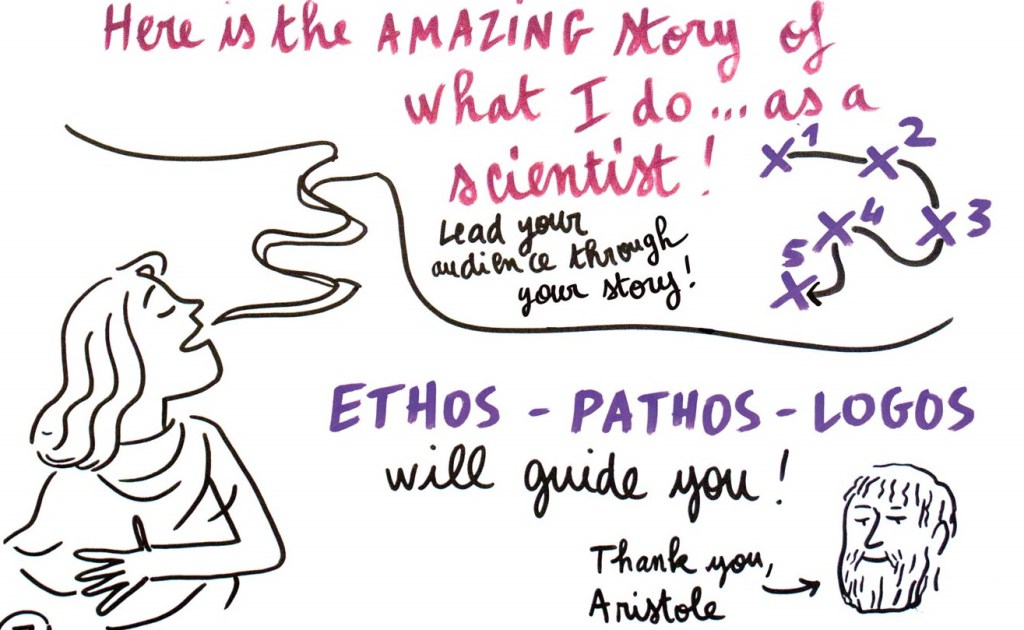
- Section 7: Science and stories - How the 'narrative' structure helps people engage with scientific findings
- Section 8: Do's and don'ts of effective science communication - Things to do and say to improve the effectiveness of your communication and things to avoid doing and saying
- Section 9: Additional reading and references - A list of the research that forms the basis of the guidance offered here and additional resources and websites
The content draws on a series of workshops held with early career researchers in Europa and elsewhere between 2014-2017. The workshops were created and developed by Climate Outreach and the Tyndall Centre for Climate Change Research, as part of the European Union (EU)-funded Helix project.
Sciences Switzerland website, February 1 2018. Image credit: Barbara Govin
- Log in to post comments