New Insights on the Road to Zero
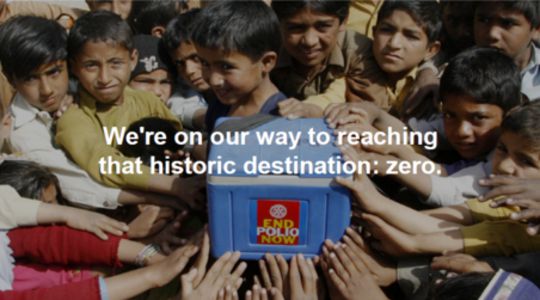
This presentation by the United Nations Children's Fund (UNICEF) explores that organisation's response to the Independent Monitoring Board (IMB) of the Global Polio Eradication Initiative (GPEI), which, in its May 2013 report, recommended that the Programme "urgently construct and implement a plan to correct its crippling under-emphasis on social mobilization and communications."
UNICEF's contribution involved exploring trust between the polio programme and caregivers, looking at the social dynamics, polio-religious dynamics, and insecurity that impact the decision to vaccinate. At the time of this presentation, UNICEF had expanded their expertise from 6,648 to 13,202 social mobilisers in Afghanistan, Nigeria, and Pakistan. They increased their communications staff with wisdom in storytelling, innovation, and knowledge management. They also scaled up external expertise.
The progress made in these areas resulted in a real reduction in refusals, with high approval of the oral polio vaccine (OPV). Innovations are facilitating faster and better communication - e.g., voice short messaging service (SMS) using local religious leaders' voices in Pakistan and Bluetooth video sharing at the doorstep in Nigeria. Better data - e.g., through Harvard polling of community perceptions in Afghanistan, Democratic Republic of the Congo (DRC), Nigeria, Pakistan, and Somalia - give UNICEF new insights that can inform improved strategies.
So, at the time of this presentation, the biggest problem was said to be getting to the remaining children. As subsequent slides outline, this is not merely an issue of reaching the doorstep. Two paths are suggested:
- Overcoming barriers to vaccinating children in accessible areas - this involves, for example, increasing the number of female social mobilisers in Afghanistan and Pakistan (Nigeria was doing very well at this point, with 100%). Approval is not a steady state; hesitation can endanger success.
- Finding ways to reach children in insecure areas.
Part of the explanation for not reaching children in these areas can be attributed to distrust, the reasons for which vary (distrust in the vaccine, distrust in the programme, distrust in vaccinators). There are social barriers impacting support for OPV in Federally Administered Tribal Areas (FATA) of Pakistan and Borno, Nigeria.
However, COMNet is managing to vaccinate more "unavailable" children after campaigns. In Nigeria, specifically, all programme partners are providing additional services to communities in Kano, Borno, and Yobe.
The presentation looks at plans for 2014, with an eye to what would constitute excellence in certain areas (e.g., from collecting social data to systematically using social data in microplans and strategies).
Concluding slides share examples of additional GPEI support to communications and social mobilisation - from Rotary, World Health Organization (WHO), and the Centers for Disease Control and Prevention (CDC).
Email from Ellyn Ogden to The Communication Initiative on April 2 2018.
- Log in to post comments