










































Advocacy for Stronger Immunization Programs
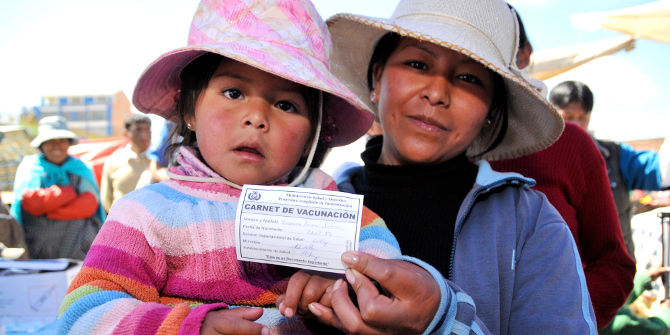
In 2001, GAVI in partnership with PATH published a report entitled "Advocacy for Immunization: How to Generate and Maintain Support for Vaccination Programs". In 2010, the United Nations Children's Fund (UNICEF) published "Advocacy Toolkit - A Guide to Influencing Decisions that Iimprove Children's Lives". This chapter in a book published by the Sabin Vaccine Institute takes the main lessons from these documents and attempts to simplify the advocacy process so that individuals are empowered to advocate for immunisation.
The chapter begins by defining advocacy. In global health, particularly in the context of supporting behavioural change, the terms "advocacy", "communication", and "social mobilisation" are often used interchangeably. This can happen because the 3 concepts involve social processes that overlap. Depending on the goal, advocacy can be called engagement, lobbying, public relations, policy development, awareness raising, empowerment, social mobilisation, campaigning, media work, and communications (see Table 1).
Advocacy is a tool that can help sustain immunisation programmes at all stages. For example, after a vaccine is introduced, continued advocacy efforts can help achieve and maintain coverage levels, foster community demand, and communicate the health gains and benefits achieved. Effective advocacy can: increase the visibility of a topic, help facilitate dialogue, identify erroneous information and refute misinformation, facilitate access to information, disseminate impartial scientific evidence, shape public policies, connect people, and empower communities.
There are several elements that can enable effective advocacy: the relevance of the cause; the power of the advocates, which lends strength to the outreach; the thoroughness with which the advocates researched the issues; the state of the opposition; the climate of opinion about the issue in the community; the advocates' skill in using the advocacy tools available (including the media); the selection of effective strategies and tactics; and the credibility of the advocates.
The chapter lays out a 7-step advocacy strategy:
- Identify an issue, such as better community acceptance of immunisations.
- Conduct research, which involves, in part, creating a list of resources that can be mobilised in order to achieve your objectives (e.g., contacts in the media, government personnel, and members of community groups).
- Identify audiences to be reached in order to effect the desired change, who usually fall under 4 broad categories that, though diverse, interact with and influence one another: (i) potential partners such as aid organisations, government agencies, non-governmental organisations (NGOs), and researchers; (ii) policymakers and decision makers that can influence vaccination; (iii) the general public; and (iv) traditional and digital media.
- Elaborate a plan, starting with the decision on an overarching goal, which is followed by drafting the supporting objectives.
- Establish a clear and concise message, using simple language that is tailored to fit the audience and their level of understanding about the topic. "A range of channels should be used to deliver the messages, including community volunteers and health workers, as well as the mass media....At the core of every message is:
- Content (what): what will you say and how will you word it?
- Audience (who): which is the most important audience or the audience you must reach most urgently?....What do you want them to do with this information or content? Be very clear.
- Channel (how): how will you share your content? Mass media: TV, public service announcements, etc.
- Timing (when): ask yourself, is there a particular moment when your audience will be more easily engaged or more prone to act on your message? Is there a particular news event or change in the message's and audience's context that will facilitate communication?
- Metrics (did it work?): did your message achieve your goal? If not, how can you improve or adjust it?..."
- Build support by mobilising and collaborating with key organisations and people, the community, and the media. Table 2 shows channels by which each partner can be engaged.
- Monitor, evaluate, and adjust the plan by, first, defining appropriate indicators to measure the advocacy effort. Process indicators measure the effectiveness of activities being undertaken, whereas impact indicators measure how much of the observed change can be attributed to the plan. Table 3 provides examples of measurement indicators for advocacy activities. The monitoring and evaluation (M&E) process is an ongoing activity done in parallel with the advocacy activities.
In conclusion: "Advocacy as a core component of an immunization program can help achieve coverage goals, mobilize the community and policy makers towards best immunization practices and support policy change that can lead to long term sustainability."
Publishers
English, Spanish
10 (English); 11 (Spanish)
Module 4, "Vaccine Advocacy and Social Communication", within Vaccinology in Latin America: A Resource for Immunization Managers. Image credit: PAHO, CC BY-ND 2.0
- Log in to post comments